Visit houselogic.com for more articles like this.

© Copyright 2025 NATIONAL ASSOCIATION OF REALTORS®

July 18, 2025

Calmer Rates, Better Deals: Why Now Is a Great Time to Buy

Let’s face it—buying a home hasn’t been easy these past few years. Between surging prices and rising mortgage rates, many hopeful buyers have felt stuck on the sidelines.

But here’s the good news: things are starting to shift. Mortgage rates have begun to stabilize, and while affordability is still a challenge, this new consistency could be the window of opportunity you’ve been waiting for. If you’ve been holding off, now might be the perfect time to rethink your move.


Mortgage Rates Just Leveled Out – What That Means for You

Over the past year, mortgage rates have been on a bit of a rollercoaster, leaving many buyers unsure of what’s coming next. Lately though, there's been a shift—rates have begun to stabilize, settling into a more consistent and predictable range (see graph below):
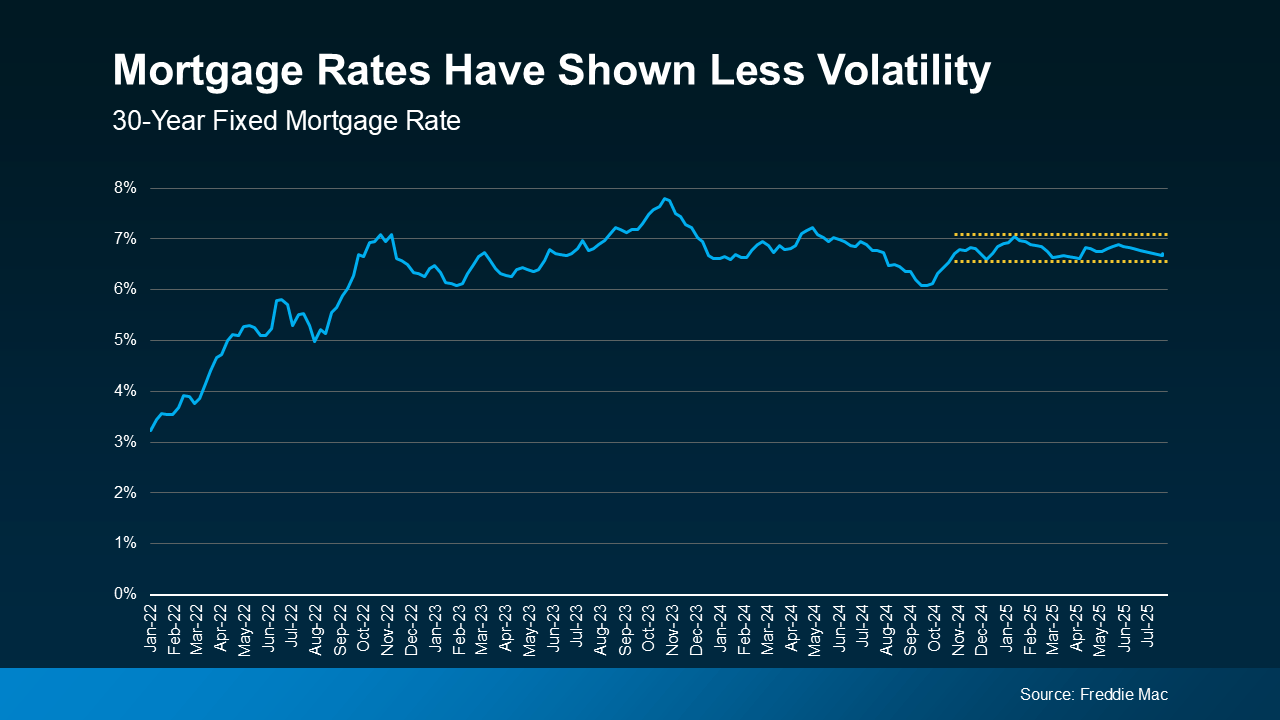
 

As you can see in the graph, mortgage rates have remained within a half-percent range since late last year. While there’s still some fluctuation, the dramatic spikes and dips we've seen in the past have calmed down. That kind of stability matters more than you might think. As HousingWire puts it:


“Analysts, economists and mortgage professionals are coining this quarter’s activity as one of the most “calm” periods for mortgage rates in recent memory.”


Why This Shift Is Good News for Buyers

Let’s be honest—uncertainty makes planning tough. When mortgage rates are jumping from week to week, it can feel overwhelming and risky to move forward. But with rates holding steady over the past several months, it’s easier to get a clearer view of what your monthly payment might look like. That kind of consistency takes some of the guesswork out of the equation and makes buying a home feel more manageable—and within reach.

So, instead of waiting for the perfect moment—start planning for the right one. Rates might not be exactly where you'd hoped, but the recent stability is a welcome shift. And that steady ground could be just what you need to confidently take the next step.

View More
June 24, 2025

More Homes on the Market? Here's Why That's Great News for Buyers

Perhaps you've noticed the buzz about a record number of homes on the market—and wondered if that signals an impending housing crash.

In truth, the numbers tell a different story. In many areas, increased inventory isn't a warning; it's a welcome indicator that the market is moving toward stability and long-term health.

🔍 What’s Really Happening With Housing Inventory?

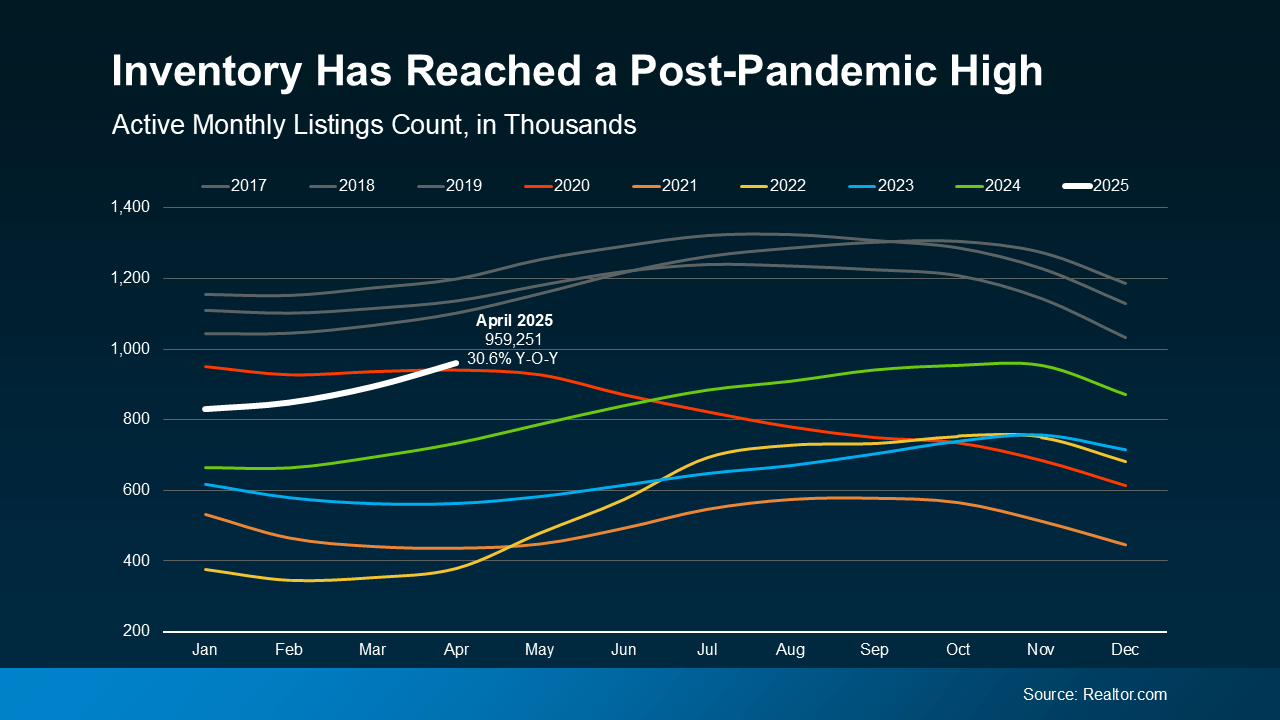
According to the latest data from Realtor.com, the number of homes on the market has reached its highest point since 2020 (see the white line in the graph below).

However, it’s important to keep this in perspective: inventory levels are still well below where they were before the pandemic (as shown in gray). So while we’re seeing growth, we’re not yet back to typical, pre-2020 market conditions.

That means there are more homes available now than we’ve seen in recent years.

While it’s true that inventory has increased compared to the ultra-competitive pandemic market, we’re still well belowwhat’s considered normal. And that context matters.


🏘️ Why Rising Inventory Isn’t a Red Flag

When people hear “inventory is up,” many instantly think of 2008—when a flood of listings led to a market crash. But today’s market is nothing like that.

The difference? Back then, we had too many homes and not enough buyers. Now, we’re experiencing the opposite—a severe housing shortage that’s been building for over a decade.

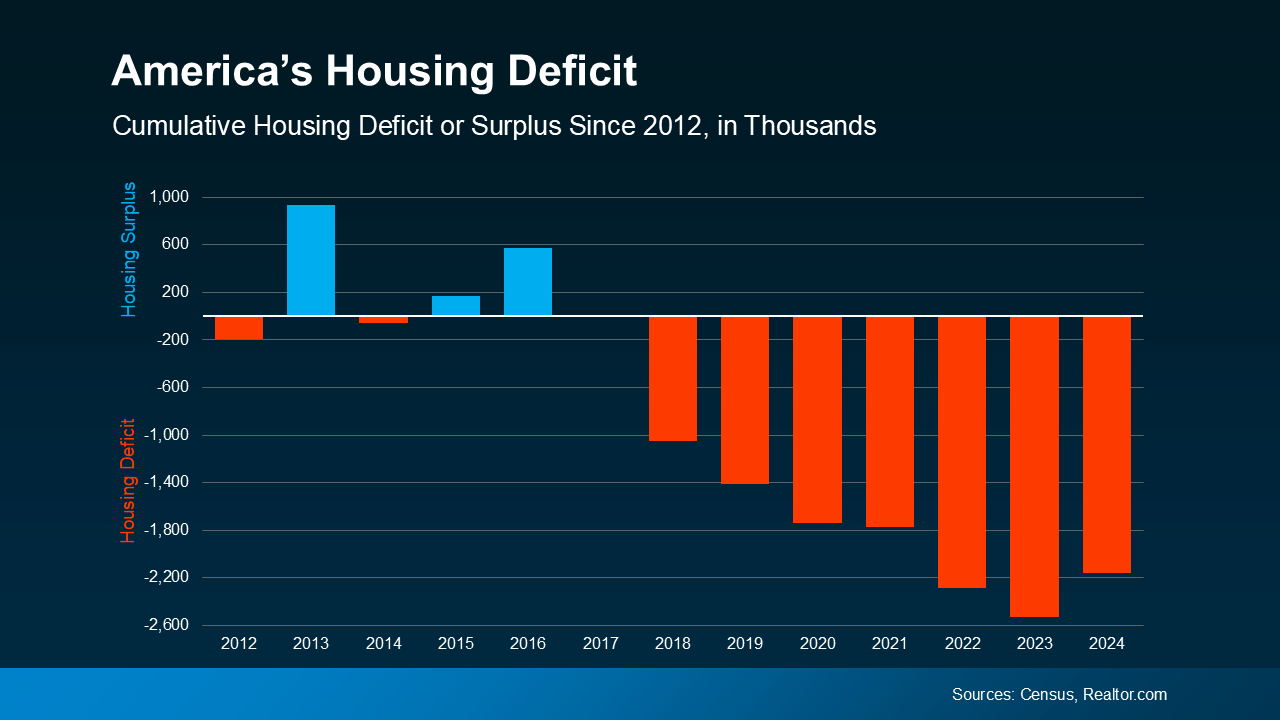
Take a look at the red bars in the graph below. They represent the years since 2012 when new home construction couldn’t keep up with the number of households being formed. The deeper the bar, the bigger the gap between demand and supply—and the more we’ve fallen behind.

In short, today’s growing inventory isn’t a sign of oversupply—it’s a step toward recovering from years of underbuilding.


One major reason this housing shortage has persisted is simple: new home construction hasn’t kept pace with the growing number of people who need places to live.

In fact, the U.S. is currently facing a shortfall of millions of homes, and closing that gap won’t happen overnight. According to Realtor.com:

“At a 2024 rate of construction relative to household formations and pent-up demand, it would take 7.5 yearsto close the housing gap.”

That’s a clear sign that we’re not in danger of having too many homes on the market—far from it. In most areas, there still aren’t enough homes to meet demand.


So even though inventory is ticking up, it’s not a warning sign. It’s a necessary—and long-overdue—step toward correcting a national shortage that’s been building for over a decade.

The Big Picture

Don’t be misled by alarming headlines—rising inventory doesn’t mean a market crash is coming. It simply signals that the housing market is slowly moving back toward balance and long-term stability. And that’s good news for buyers and sellers alike.

June 24, 2025

Thinking of Downsizing? You Might Be Able to Pay for Your Next Home Outright

🔹 Quick Takeaways:

Thinking about downsizing but still waiting for the right moment? Your current home’s equity might be the opportunity you’ve been waiting for.

With today’s homeowners sitting on record-high equity, many are using it to purchase their next home in all cash—eliminating mortgage payments, speeding up the closing process, and standing out in competitive markets.

Curious how much equity you’ve built up? Let’s connect and run the numbers—you might be closer to your next move than you think.

June 6, 2025

Buy Land, Build Wealth: Real Estate’s Enduring Power

Lately, headlines about the housing market seem full of uncertainty. Are prices rising or falling? Is a crash coming? Will interest rates ever drop? With so much noise, it’s easy to wonder if buying a home right now really makes sense.

But here’s something often overlooked: real estate is a long-term game. When you focus beyond the latest headlines and look at the bigger picture, it’s clear why so many still consider it the best investment—especially today.

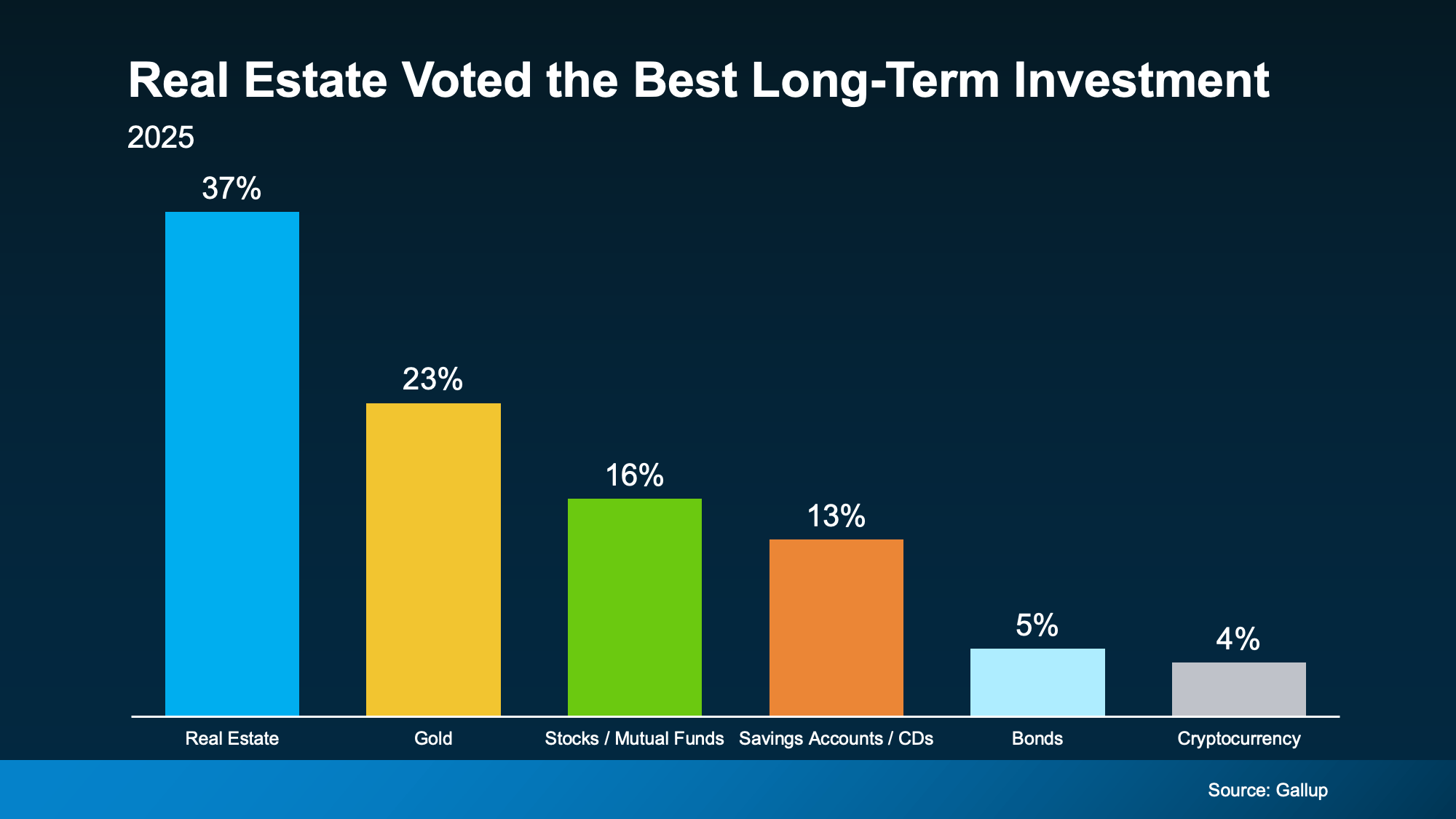
In fact, according to Gallup’s latest annual report, real estate has been America’s top long-term investment for 12 years straight, consistently outperforming stocks, gold, and bonds.


This isn’t new—real estate often takes the top spot as the best long-term investment. What’s particularly noteworthy this year is that these results came right after a turbulent April for stocks and bonds. Despite the volatility in other markets, real estate has remained steady. This stability likely comes from its tendency to appreciate more gradually and predictably. As Gallup puts it:

"Amid volatility in the stock and bond markets in April, Americans' preference for stocks as the best long-term investment has declined. Gold has gained in appeal, while real estate remains the top choice for the 12th consecutive year."

That speaks volumes. Even amid today’s economic uncertainties, real estate remains a strong and reliable investment.

It’s true that home values are increasing more slowly right now. In some markets, prices might stay flat or even dip slightly in the near term—but that’s only part of the story. Don’t let short-term fluctuations overshadow the bigger picture.

Historically, real estate has steadily gained value over time. That’s the kind of consistent growth you can depend on—especially if you plan to stay in your home for the long haul.

This long-term confidence is why so many Americans continue to embrace homeownership, even when the headlines feel uncertain. As Sam Williamson, Senior Economist at First American, explains:

“A home is more than just a place to live—it’s often a family’s most valuable financial asset and a cornerstone to building long-term wealth.”

What It Means for You
Real estate isn’t about quick wins—it’s about building wealth over the long term. So, don’t let market ups and downs make you think now isn’t a good time to buy.

If you’re feeling uncertain, remember this: for years, Americans have ranked real estate as the best long-term investment. Want to learn more about why homeownership continues to be a smart choice? Let’s talk.

May 28, 2025

12 Years Running — Why Real Estate Is the Smartest Long-Term Investment

View More
May 16, 2025

Debunking the 20% Down Payment Misconception

Saving for a home can definitely feel overwhelming—especially in today’s market. And if you’re a first-time buyer, you might think you have to come up with a full 20% down payment, which can seem like a huge hurdle.

But here’s the good news: that’s actually one of the biggest homebuying myths out there. Let’s break it down.

Do You Actually Need 20% Down to Buy a House?

Unless your lender or loan type specifically requires it, chances are you won’t need to put 20% down. In fact, there are several loan programs designed to help first-time buyers get started with much lower down payments.

For instance, FHA loans allow down payments as low as 3.5%, and VA or USDA loans may offer zero down payment options for those who qualify—like Veterans. While a larger down payment can offer some advantages, it’s definitely not a requirement. As The Mortgage Reports puts it:

“. . . many homebuyers are able to secure a home with as little as 3% or even no down payment at all . . . the 20 percent down rule is really a myth.”

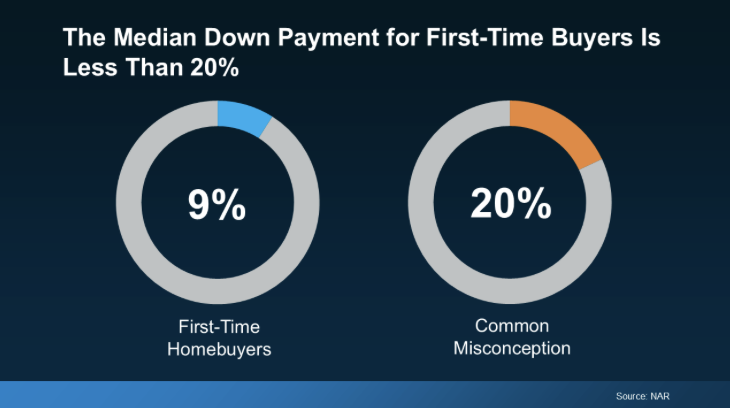
According to the National Association of Realtors (NAR), first-time homebuyers are putting down much less than you might think—the median down payment is only 9% (see chart below):


The takeaway? You may not need to save as much as you originally thought. 

The best part? There are plenty of programs available to help boost your down payment savings—and chances are, you might not even know they exist.

The Benefits of Exploring Down Payment Assistance Programs

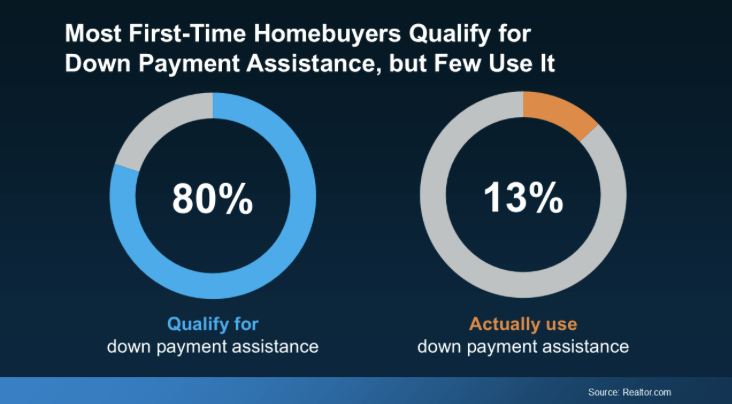
Believe it or not, almost 80% of first-time homebuyers qualify for down payment assistance (DPA), but only 13% actually use it(see chart below):

hat’s a lot of missed opportunity. These programs aren’t small-scale help, either. Some offer thousands of dollars that can go directly toward your down payment. As Rob Chrane, Founder and CEO of Down Payment Resource, shares:

“Our data shows the average DPA benefit is roughly $17,000. That can be a nice jump-start for saving for a down payment and other costs of homeownership.”

Just imagine how much further your homebuying savings could stretch with $17,000 in assistance. In some cases, you may even be able to combine multiple programs, giving your savings an even bigger boost. These are the kinds of opportunities you definitely don’t want to miss out on.

The Takeaway
Saving for your first home can feel overwhelming—especially if you’re under the impression that a 20% down payment is a must. But that’s actually one of the biggest myths in homebuying. Many loan programs require much less, and there are even assistance options available to help stretch your savings further.

To find out what you might qualify for, connect with a trusted lender who can walk you through your options.

May 1, 2025

Your Moving Journey Just Got More Flexible


Top 3 Reasons to Restart Your Home Search

1. New Budget-Friendly Options
If you paused your home search because nothing fit your budget, now’s a great time to jump back in.

2. More Homes Hitting the Market
There’s a growing number of listings, with fresh inventory added each month—giving you a wider variety to choose from.

3. More Possibilities Than Ever
More choices mean a better chance of finding the right fit. Let’s connect and see what’s available in our local market!

April 24, 2025

Does Your Current Home Fit Your Retirement Plans?

Retirement isn’t just the end of a career – it’s the start of a brand-new chapter filled with freedom, discovery, and the chance to truly live life on your own terms.

After years of hard work, this season is about slowing down, pursuing what you love, and enjoying the moments that matter most.

But with this exciting transition come some important decisions – and one of the biggest is whether your current home still fits your lifestyle, needs, and budget for the years ahead.

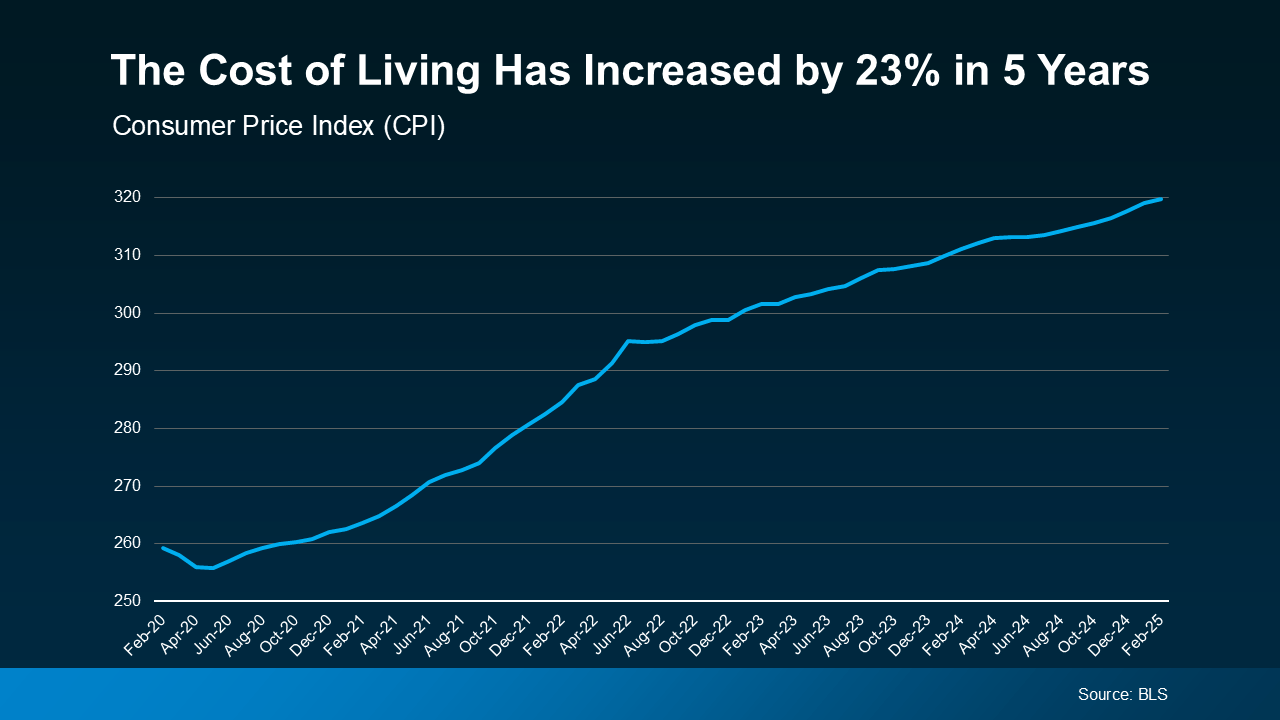
That question is more relevant now than ever. Over the past five years, the cost of living has surged by 23%, according to the Bureau of Labor Statistics (BLS). This increase is based on the Consumer Price Index (CPI), which measures the average change in prices for everyday goods and services (see graph below):

As you think about how to make your retirement savings last, rising costs are definitely something to keep in mind. If you’re starting to question whether your budget will go the distance, you’re not alone — and the good news is, you may have more options than you realize.

One smart strategy many retirees are using to stretch their savings is relocating. Simply put, your money can go further in certain areas.

By moving to a location with a lower cost of living — and possibly downsizing at the same time — you can reduce ongoing expenses like housing, utilities, and taxes. That means more room in your budget for what really matters: travel, hobbies, time with the grandkids, or checking off bucket list adventures.

Of course, relocating isn’t the only path. But it is worth considering whether your current home and location align with the lifestyle you want and the budget you’ve planned for. It’s all about being intentional. As GoBankingRates puts it:

“How much you should have saved for retirement depends on a few key factors, including your location. Where you choose to spend your golden years is critical.”

And the good news is — you don’t always have to move far to make a difference. For some, it might mean relocating to another state, but for others, simply moving from the city to the suburbs can offer significant savings. It’s definitely something to keep in mind as you plan your next chapter.

Whether you’re thinking about downsizing, moving closer to family, or settling in an area where your savings can stretch further, a knowledgeable real estate agent can be a valuable resource. They’ll help you explore options that align with your goals, simplify the process of selling your current home, and even connect you with trusted agents across the country if your move takes you farther from home.

The Bottom Line
You’ve put in the hard work to create a future worth enjoying. If your current home or location no longer fits the life you envision, it might be time to consider new possibilities.

So, what does your ideal retirement look like? And could a change of scenery help bring it to life? Let’s connect and explore how to turn that vision into reality.

View More
Posted in Market Updates