Saving for a home can definitely feel overwhelming—especially in today’s market. And if you’re a first-time buyer, you might think you have to come up with a full 20% down payment, which can seem like a huge hurdle.
But here’s the good news: that’s actually one of the biggest homebuying myths out there. Let’s break it down.
Do You Actually Need 20% Down to Buy a House?
Unless your lender or loan type specifically requires it, chances are you won’t need to put 20% down. In fact, there are several loan programs designed to help first-time buyers get started with much lower down payments.
For instance, FHA loans allow down payments as low as 3.5%, and VA or USDA loans may offer zero down payment options for those who qualify—like Veterans. While a larger down payment can offer some advantages, it’s definitely not a requirement. As The Mortgage Reports puts it:
“. . . many homebuyers are able to secure a home with as little as 3% or even no down payment at all . . . the 20 percent down rule is really a myth.”
According to the National Association of Realtors (NAR), first-time homebuyers are putting down much less than you might think—the median down payment is only 9% (see chart below):
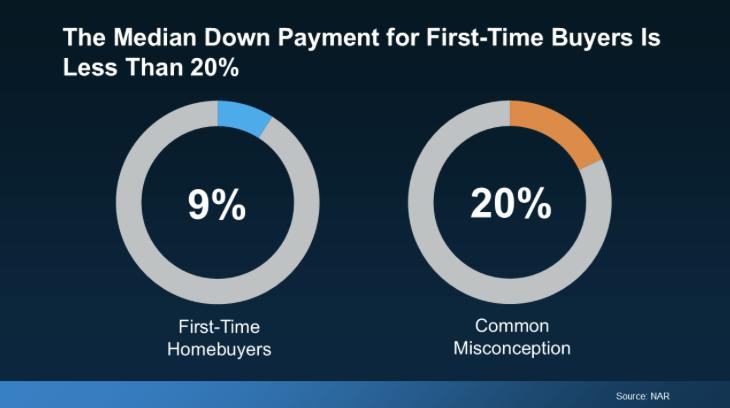
The takeaway? You may not need to save as much as you originally thought.
The best part? There are plenty of programs available to help boost your down payment savings—and chances are, you might not even know they exist.
The Benefits of Exploring Down Payment Assistance Programs
Believe it or not, almost 80% of first-time homebuyers qualify for down payment assistance (DPA), but only 13% actually use it(see chart below):
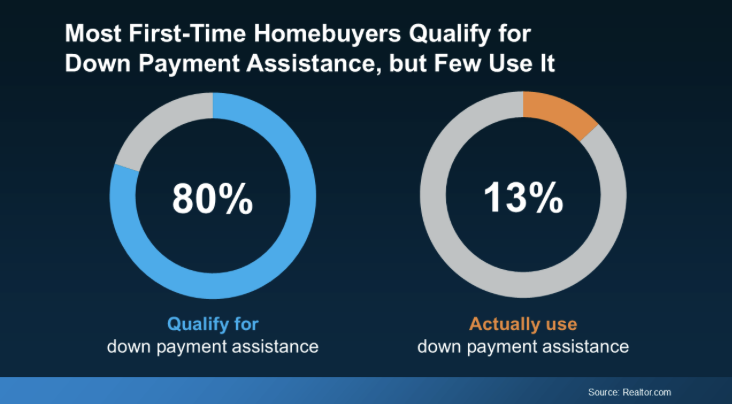
hat’s a lot of missed opportunity. These programs aren’t small-scale help, either. Some offer thousands of dollars that can go directly toward your down payment. As Rob Chrane, Founder and CEO of Down Payment Resource, shares:
“Our data shows the average DPA benefit is roughly $17,000. That can be a nice jump-start for saving for a down payment and other costs of homeownership.”
Just imagine how much further your homebuying savings could stretch with $17,000 in assistance. In some cases, you may even be able to combine multiple programs, giving your savings an even bigger boost. These are the kinds of opportunities you definitely don’t want to miss out on.
The Takeaway
Saving for your first home can feel overwhelming—especially if you’re under the impression that a 20% down payment is a must. But that’s actually one of the biggest myths in homebuying. Many loan programs require much less, and there are even assistance options available to help stretch your savings further.
To find out what you might qualify for, connect with a trusted lender who can walk you through your options.