Visit houselogic.com for more articles like this.

© Copyright 2025 NATIONAL ASSOCIATION OF REALTORS®

Dec. 18, 2025

Buyer Demand Is Shifting—Here’s What Sellers Should Know

The housing market is showing a level of energy we haven’t seen in quite some time—and the data behind it is hard to ignore. Mortgage rates have dropped by nearly a full percentage point this year, and that shift is bringing buyers back into the market.

Home loan applications are rising. Buyer activity is gaining traction. And sellers who act sooner rather than later may be able to ride this momentum before competition increases.

Let’s break down what’s happening behind the scenes—and how you can position yourself to benefit.

When Rates Drop, Buyer Activity Rises

Buyer demand in today’s market is closely tied to mortgage rates. As rates ease, more buyers begin applying for home loans and re-entering the market. Rick Sharga, Founder and CEO of The CJ Patrick Company, explains it this way:

“We’re in an incredibly rate-sensitive environment today, and every time mortgage rates dip into the low-to-mid 6% range, we see a surge of buyers returning to the market.”

That trend is reflected clearly in the data. Many buyers who were previously on the sidelines are now moving forward as borrowing costs decline. While activity will continue to fluctuate alongside rate changes, the bigger picture is clear—buyer demand has steadily improved since rates began to fall.

According to the Mortgage Bankers Association (MBA), the Mortgage Purchase Index is currently near its highest level of the year.
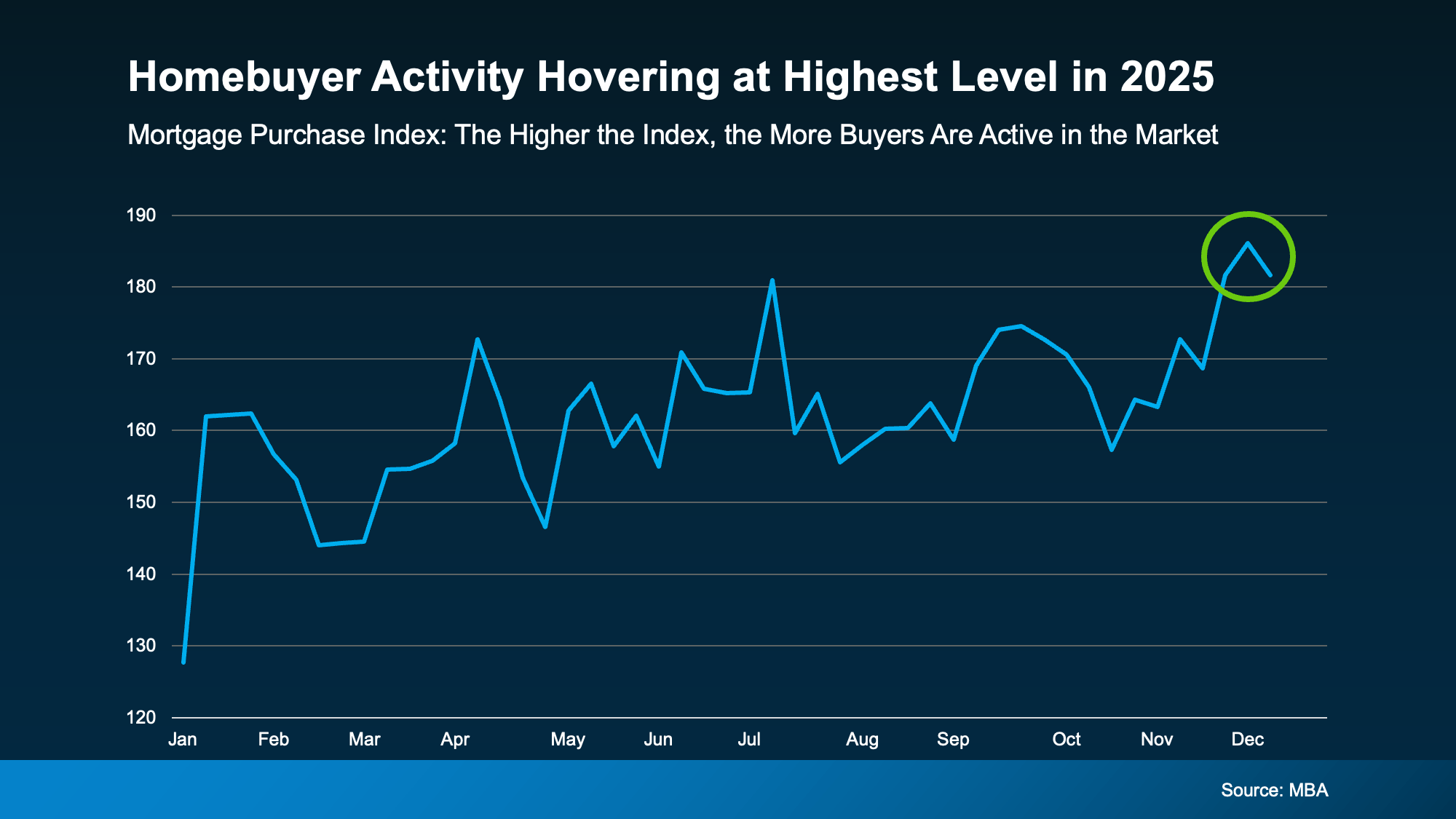
 

And that’s not the only positive signal. MBA data shows mortgage applications have recently reached their highest level in nearly three years—a clear indication buyer demand is trending upward as we head into 2026.
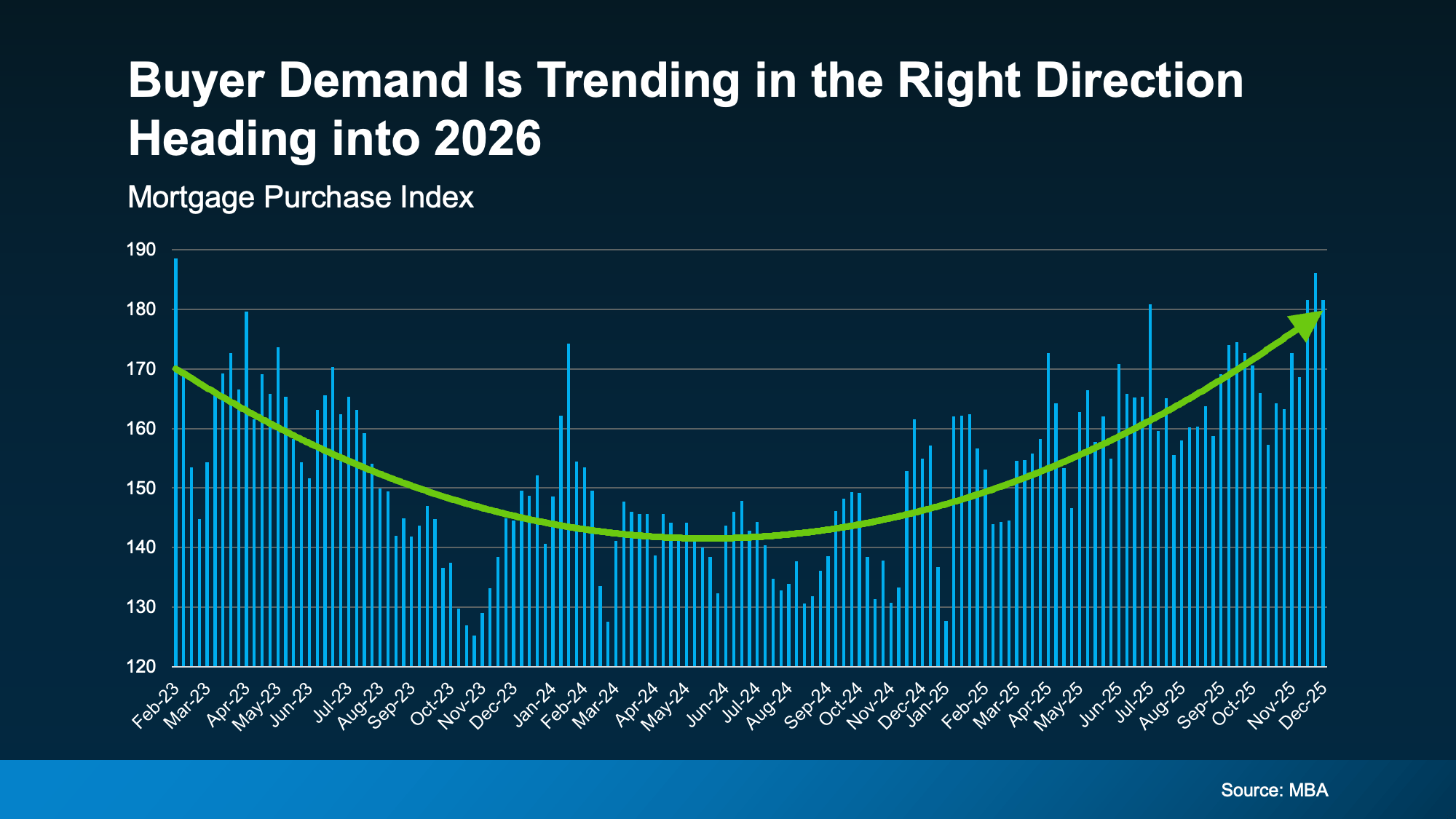
 

And just to be clear, this isn’t simply a wave of pent-up demand from the brief government shutdown that slowed the processing of certain loans. Looking back at the data, you’ll notice buyer activity has been building steadily throughout the year—not just in recent weeks.

Here’s the key takeaway: as mortgage rates have eased, buyers are gradually re-entering the market. And that renewed interest is translating into real offers and signed contracts on homes like yours.

Home Sales Are Gaining Momentum

To further confirm this positive trend, the latest report from the National Association of Realtors (NAR) shows pending home sales—homes currently under contract—are on the rise as well. In fact, the Pending Home Sales Index has reached its highest level of the year (see graph below).
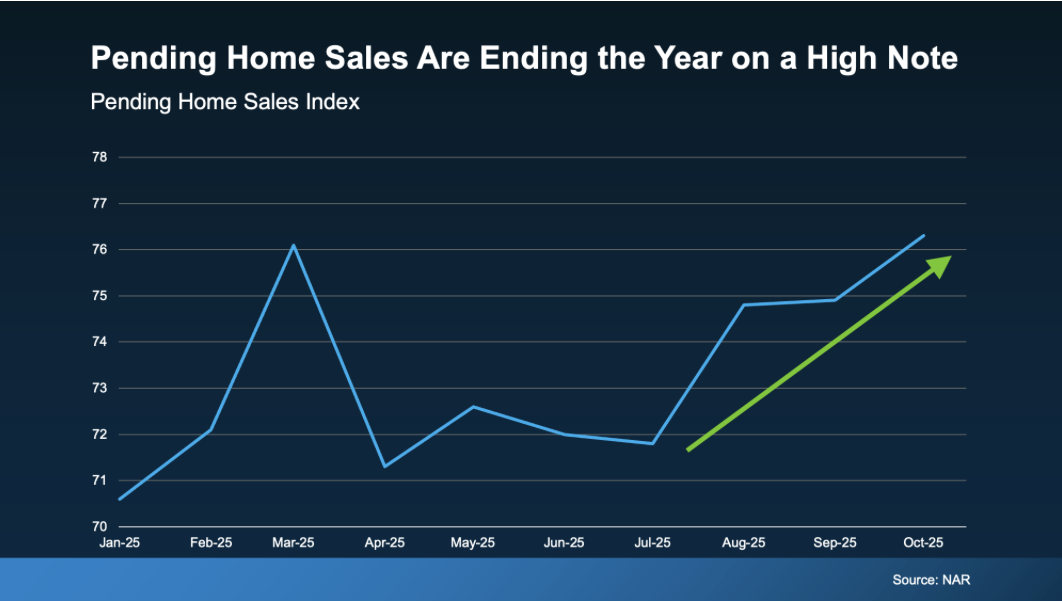
 

All signs point to the market closing out the year on a strong note and heading into 2026 with renewed momentum. While the shift may feel subtle, it’s a meaningful rebound—and one worth paying attention to.

Pending home sales are a key indicator of where the market is headed. When more homes go under contract, it typically signals an increase in closed sales in the months that follow. That’s one reason experts are forecasting a modest rise in home sales in 2026 compared to both 2025 and 2024.

Of course, some short-term fluctuations are normal, especially with year-end mortgage rate movement. But these ups and downs aren’t expected to derail the broader trend. Expert projections suggest rates will remain relatively stable throughout 2026, setting the stage for continued buyer activity in the months ahead.

What This Means for You

This creates a real opportunity for sellers who act now:

  • Stronger buyer demand. As affordability improves, more buyers are re-entering the market—leading to increased showings and interest, especially for homes that are priced and presented well. Many of these buyers feel they’ve waited long enough and are motivated to move.

  • Getting ahead of the competition. Listing earlier puts you in front of buyers before more sellers recognize the shift and jump back into the market.

If you’ve been holding off because you thought buyers weren’t active—or if you previously pulled your home off the market due to low interest—this may be the moment you’ve been waiting for.

Bottom Line

Curious about what buyer activity looks like in our local market and how it could impact your plans to sell in the new year?

Let’s talk about positioning your home for an early 2026 listing so you can take advantage of the momentum already building in the market.

Dec. 1, 2025

Renting vs. Owning: Why Homeownership Builds Wealth Over Time

Renting often feels easier and cheaper than buying a home — especially right now. No repairs to worry about, no property taxes, no stress about mortgage rates. You pay the rent and keep life moving.

But here’s what doesn’t get said enough: renting doesn’t build your future. Homeowners, on the other hand, are growing their wealth just by owning a home.

So, if you’ve been questioning whether buying is still worth it, the long-term numbers tell a pretty clear story.

Renting vs. Owning: The Real Cost Difference

When you rent, your monthly payment is gone the moment it leaves your account — it builds someone else’s wealth. When you own, a portion of your payment comes back to you as equity (the wealth you gain as your home’s value rises and your mortgage balance goes down).

So while renting might seem affordable in the moment, it comes with a hidden long-term cost: zero return on your money.

A recent analysis from First American dug into this. They compared the true cost of renting vs. owning — including mortgage payments, taxes, insurance, and maintenance — against the equity gained over time. And they ran the data across multiple market conditions:

  • 2006: right before the housing bubble burst

  • 2015: a decade ago

  • 2019: just before the pandemic

  • 2022: when mortgage rates climbed

Across every scenario, two things stayed the same:

  • Renters lost money over time

  • Homeowners gained wealth

The data makes it crystal clear: renting keeps you stuck — owning moves you forward.


The Long-Term Advantage: Equity Builds Wealth

Here’s the simple truth: time spent owning a home builds wealth — time spent renting doesn’t.

Homeowners consistently come out ahead because equity grows year after year. And that’s after accounting for all the usual homeowner expenses like insurance, property taxes, and maintenance. First American’s analysis showed this across every time period they reviewed.

Renters continue paying — but gain nothing long-term in return. No matter which market cycle you look at, that pattern remains the same.

Now, that doesn’t mean buying is always cheaper in the short term. But the longer you own your home, the wider the wealth gap becomes between owners and renters.


Good News: Affordability Is Improving

You might be thinking, “Buying still feels out of reach for me right now.” That’s completely valid.

The past few years have been tough for buyers — competition, higher mortgage rates, rising prices.

But things are shifting:

  • Mortgage rates have started to come down this year

  • Home price growth is calming

  • Incomes have been rising

  • And according to Zillow, monthly mortgage payments are becoming a bit more manageable than this time last year

It’s not suddenly easy — but it’s more possible than it was just a few months ago. And when you look at the long-term payoff, the value of getting into the market is stronger than ever.


Bottom Line

Renting may feel simpler and less expensive today — but owning is what builds real, generational wealth over time.

And with affordability starting to improve, the door to homeownership could be closer to opening than you think.

If you’re curious about how buying could work for you — whether soon or someday — I’m here to help you explore your options, completely pressure-free.


Nov. 17, 2025

Why the VA Home Loan Matters: Critical Facts Every Veteran Should Know Right Now

If you’ve served in the military — or if your spouse has — you may qualify for one of the most powerful homebuying benefits available: the ability to purchase a home with no down payment required.

But here’s the surprising part: 70% of Veterans don’t even know they have this advantage, according to Veterans United. That’s 7 out of every 10 who might be missing out on a life-changing opportunity.


And that’s a huge missed opportunity for those who’ve earned this benefit through their service. So let’s break down what you really need to know about Veterans Affairs (VA) home loans right now.

Why VA Home Loans Are a Smart Choice

For nearly 80 years, VA loans have helped millions of Veterans and active-duty service members achieve homeownership. Here are a few of the top benefits, according to the Department of Veterans Affairs:

  • $0 Down Payment Options: Many Veterans can purchase a home without spending years saving for a down payment.

  • Lower Upfront Costs: The VA limits the types of closing costs Veterans can be charged, helping you keep more cash in your pocket at closing.

  • No Private Mortgage Insurance (PMI): Most loan types require PMI unless you put down 20%. VA loans don’t—saving you money every month.

These benefits make VA loans an excellent path for service members and their families to build stability, protect their finances, and begin creating long-term wealth through homeownership.

Why the Right Agent and Lender Matter

Using your VA home loan is smoother, easier, and more successful when you have the right team guiding you. As VA News explains:

“Choosing a military-friendly broker or agent who understands the VA home loan application process can make all the difference in the homebuying experience. Finding the right agency or brokerage is just as important as locking in a good VA mortgage lender. Communication is key to getting to the loan closing table.”

A knowledgeable agent and an experienced lender can guide you through every step of the process—from qualifying to closing—so you can be confident you’re maximizing every benefit available to you.

Bottom Line

If you’re a Veteran, the VA home loan is one of the most powerful benefits you’ve earned through your service. It offers the potential for no down payment, lower upfront costs, and no PMI—all designed to make homeownership more accessible.

Want to explore your options? Connect with a trusted lender and make sure you’re getting the full value of the benefits you’ve worked hard for.

Oct. 29, 2025

Why a $280 Shift Could Make or Break Your Buying Budget

Pressed pause on your home search because of high rates? It might be time to take another look! 👀
Affordability is finally improving — in fact, 39 of the top 50 markets are seeing positive changes.

💡 Redfin reports that monthly mortgage payments on a median home are $283 lower than they were just a few months back.
That’s real savings — and possibly your sign to restart your move! 


Those monthly savings add up quickly — nearly $3,400 a year to be exact. 💰

While that may not completely transform affordability overnight, it definitely makes a difference. When planning your homebuying budget, even a few hundred dollars can be the deciding factor between feeling confident about your purchase and feeling stretched too thin.

From a home search perspective, it could even expand your buying power.
According to Redfin:

“A borrower with a $3,000 monthly budget can now afford a $468,000 home — about $22,000 more than in June.”


If you haven’t found the right home in your price range yet, this shift could make all the difference — giving you a little more flexibility to find the one that fits your needs.

Here’s what’s driving the improvement in affordability:
✅ Mortgage rates have eased from their highs earlier this year
✅ Home price growth is slowing in many markets

Together, those trends are making a real impact on buyers’ budgets.
As Andy Walden, Head of Mortgage and Housing Market Research at ICE Mortgage Technology, explains:

“The recent pullback in rates has created a tailwind for both homebuyers and existing borrowers. We’re seeing affordability at a 2.5-year high.”

So whether you’re a first-time buyer or planning to move up, now may be the window you’ve been waiting for.
For some, the savings could be the difference between saying “not yet” and “let’s go!”

Bottom Line:
Affordability is improving in many markets, and that could change your math — and your move.
If you’ve been waiting on the sidelines, this may be your cue to start looking again.
Let’s run the local numbers together and see how much more buying power you have today.

Oct. 23, 2025

Is a Housing Market Crash Coming? Here’s the Real Story from the Experts

If you’ve seen headlines or social posts warning of a housing market crash, it’s natural to wonder whether home values are about to take a dive. But here’s the truth:
📊 The data doesn’t signal a crash — it shows steady, continued growth.

Of course, trends will differ by location. Some markets may experience stronger price gains, while others could see brief, modest dips. Still, the overall outlook remains positive — home prices are expected to rise nationally over the next five years.

The Real Story: What the Experts Are Saying

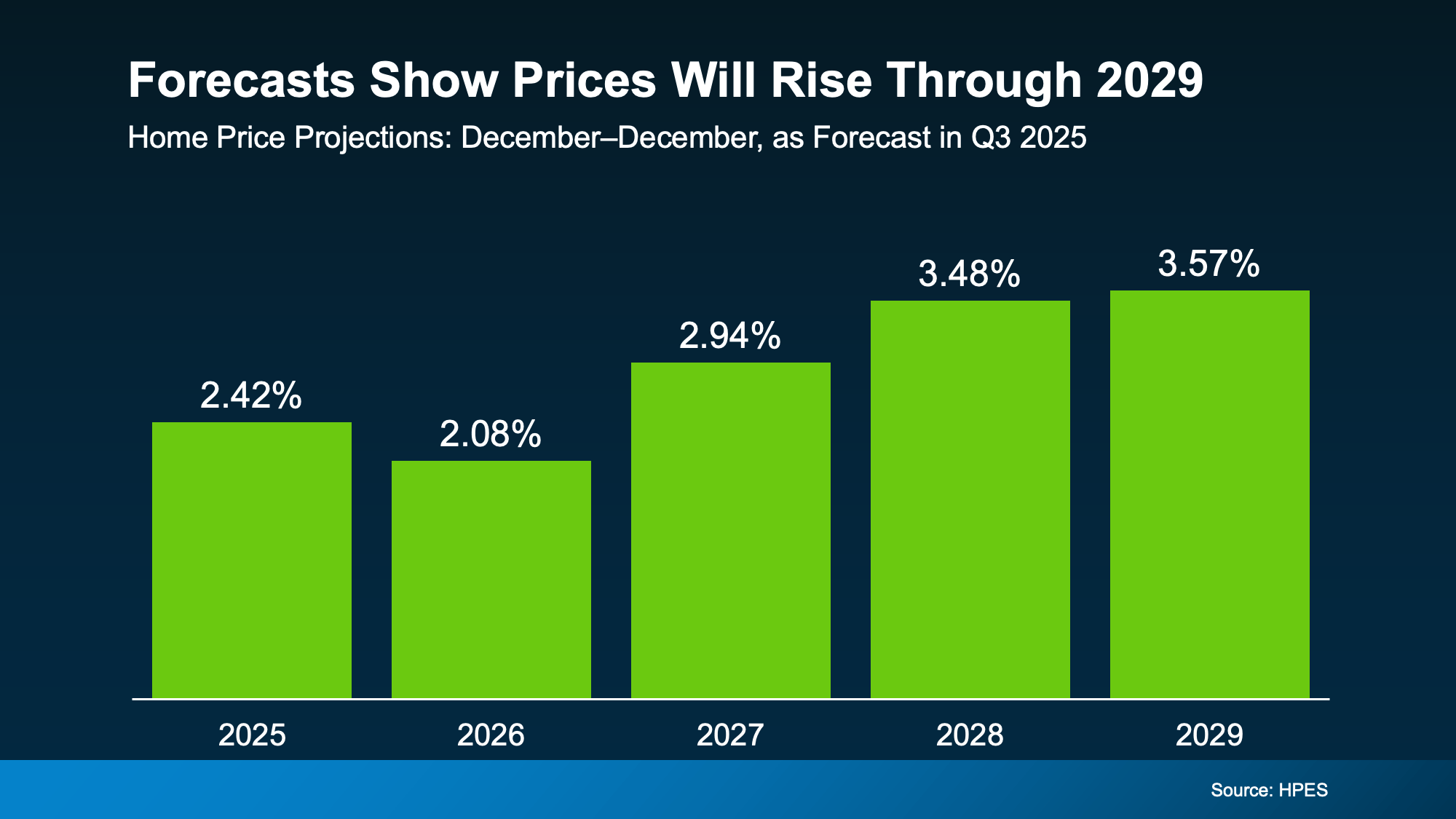
According to the Home Price Expectations Survey (HPES) by Fannie Mae, over 100 top housing market experts share their projections each quarter. The most recent report shows a clear consensus: home prices are projected to climb nationally through at least 2029.
(See the chart below 👇)


Here’s how to interpret the chart: each bar represents an increase in home prices, not a decline. The only difference year to year is the expected pace of appreciation, which naturally fluctuates.

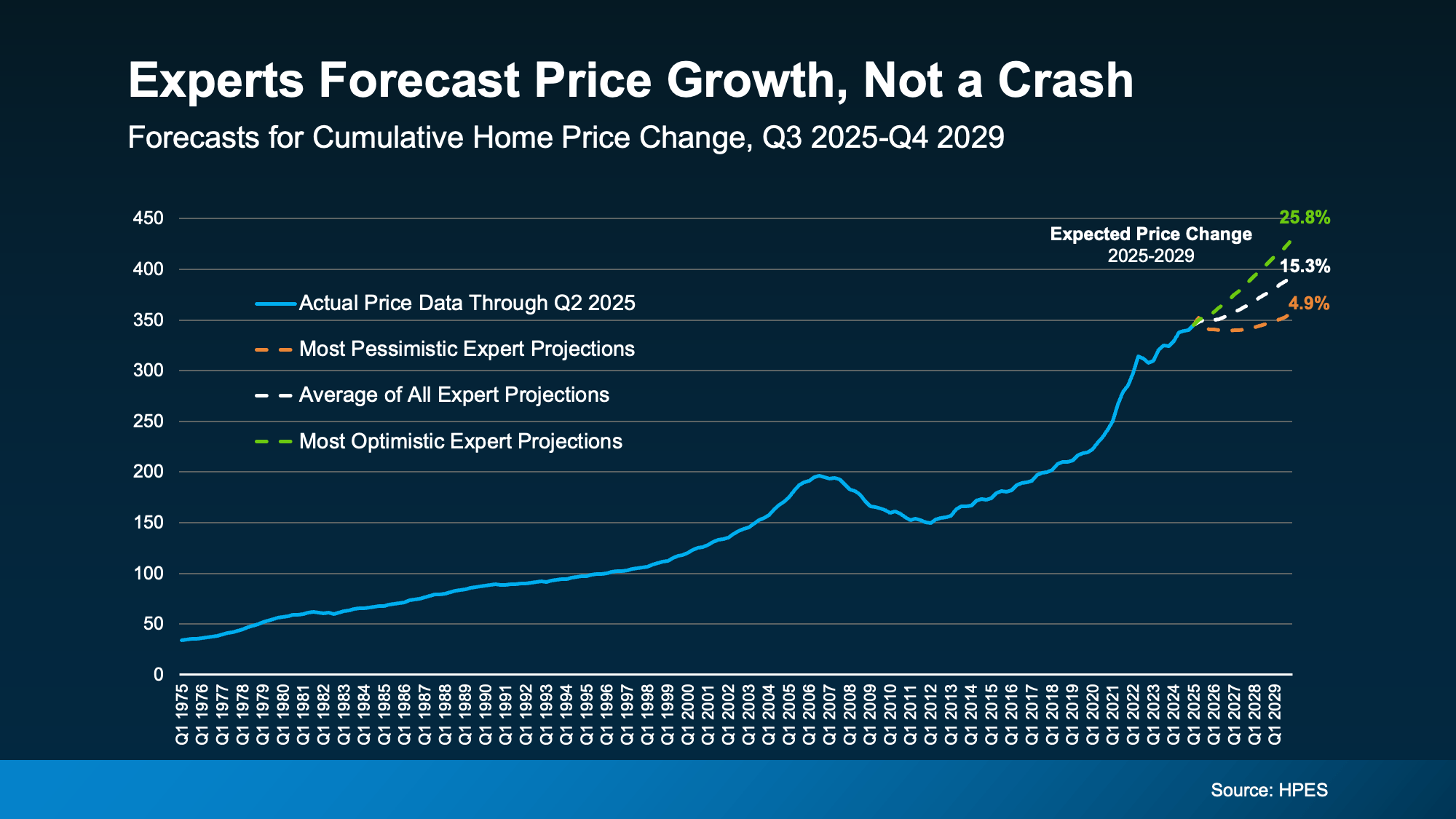
To paint an even clearer picture, let’s take a look at another breakdown of where prices stand now and where they’re projected to go. In this version, expert forecasts are divided into three groups — the overall average, the most optimistic outlooks, and the most cautious ones (see chart below 👇).


Notice something important in the data: even the most cautious experts expect prices to keep climbing—by nearly 5% over the next few years.

Overall, home prices are projected to rise about 15% between now and the end of 2029.

  • The optimists predict an increase of roughly 26%.

  • The pessimists still anticipate growth of around 5%.

💡 What stands out most? None of these experts—who study housing trends for a living—are forecasting a crash or even a decline over the next five years.


How This Compares to “Normal” Market Conditions

Take another look at the first graph. The projections show annual price increases between 2% and 3.5% over the next five years.
For perspective, the average appreciation rate over the past 25 years has hovered around 4–5% per year.

So, while these new numbers are slightly below that long-term average, they’re actually a sign of stability—a return to a healthier, more sustainable market.

Remember 2020 through 2022? Prices soared 15–20% in some areas because of record-low supply and sky-high demand. Compared to that, today’s pace may feel slower—but it’s really the market finding balance again.


Why Home Prices Aren’t Expected To Crash

A lot of today’s “crash talk” comes from people remembering how quickly prices rose and assuming what goes up must come down. But in real estate, that’s not how it works.
Historically, home prices tend to rise over time.

The key reason we’re not heading toward another 2008 scenario comes down to supply and demand.
Even with affordability challenges, there are still far more buyers than available homes—and that shortage continues to keep upward pressure on prices.

That’s why experts across the board agree:
➡️ We’re not heading for a collapse. We’re on track for steady, long-term growth.

And if you’re concerned about the broader economy, remember this: over the past 50 years, the housing market has weathered countless economic shifts—and it always recovers. We’re already seeing signs of that recovery taking shape now.


Bottom Line

If you’ve been holding off on buying or selling because you’re worried about a crash, it’s time to look past the headlines and focus on the facts.

The real question isn’t if home prices will rise — it’s how much.

📞 Let’s connect so we can discuss what’s happening in our local market and what these expert forecasts mean for your next move.

Posted in Market Forecasts
Oct. 7, 2025

Why Housing Experts Expect Mortgage Rates to Ease in the Year Ahead

You’ve been hoping for mortgage rates to drop — and the good news is, they’ve started to! But will this downward trend continue? And just how low could rates go?

According to housing experts, there’s still room for further decline over the next year. One key factor to watch is the 10-year Treasury yield — a leading indicator that offers valuable clues about where mortgage rates are headed.

The Connection Between Mortgage Rates and the 10-Year Treasury Yield
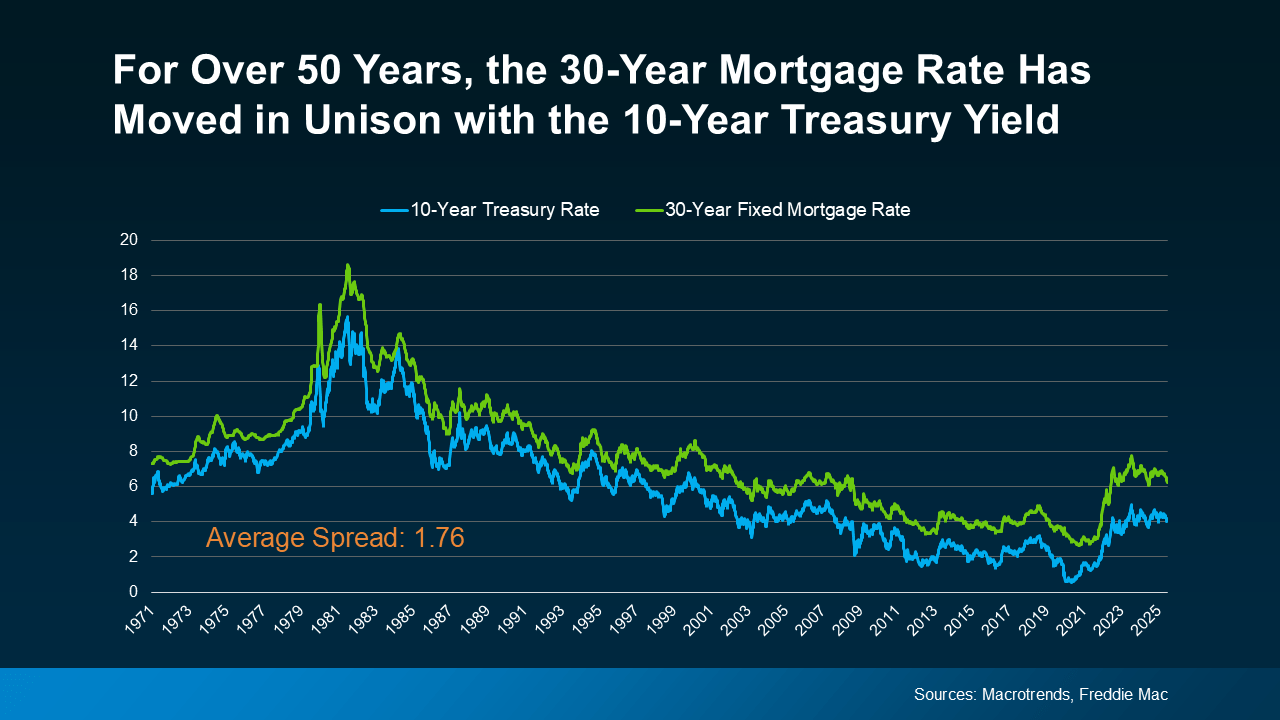
For more than 50 years, the average 30-year fixed mortgage rate has moved closely in line with the 10-year Treasury yield — a trusted benchmark for long-term interest rates. (See graph below.)


When the 10-year Treasury yield rises, mortgage rates almost always follow. And when it drops? Mortgage rates typically ease too.

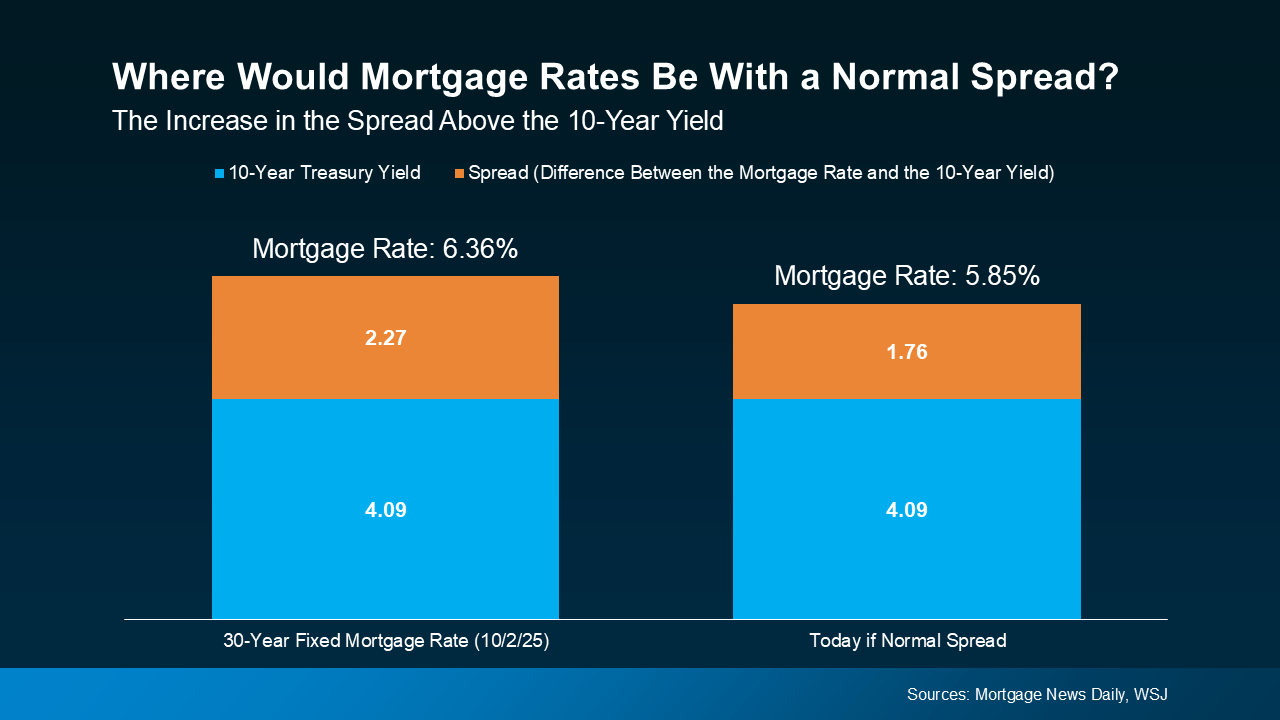
It’s a relationship that’s held steady for more than half a century — so steady that experts can even predict what the “normal” gap between the two should be. That gap is called the spread, and it usually sits around 1.76 percentage points(or 176 basis points, if you’ve heard the term).

The Spread Is Shrinking — and That’s Good News
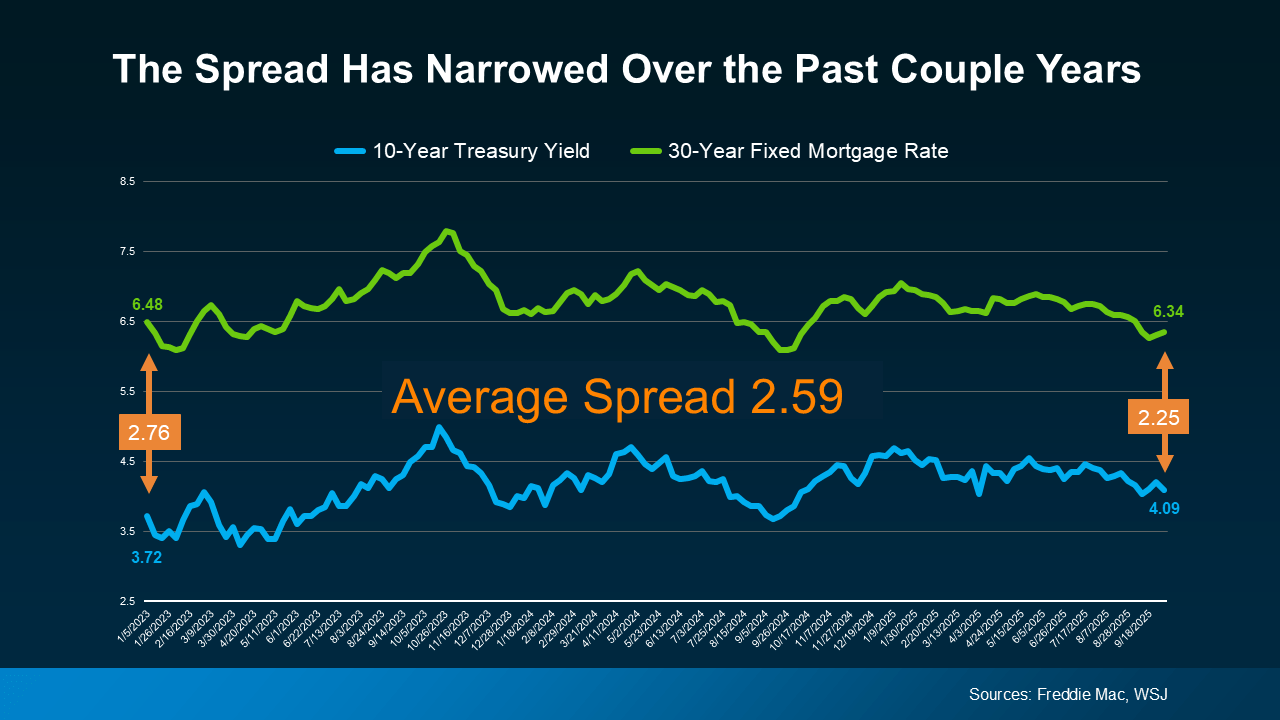
In recent years, that spread has been much wider than usual. Why does that matter? Think of the spread as a barometer of market confidence. When uncertainty clouds the economy, fear widens the gap — and mortgage rates climb higher than expected.

But here’s the encouraging part: that extra-wide spread is finally narrowing. As economic conditions stabilize and confidence grows, the gap is starting to close — a promising signal that mortgage rates could continue easing in the months ahead (see graph below).

And that’s great news — it means there’s room for mortgage rates to fall even more. According to a recent report from Redfin:

“A lower mortgage spread equals lower mortgage rates. If the spread continues to decline, mortgage rates could fall more than they already have.”

The 10-Year Treasury Yield Is Expected To Decline

It’s not just the spread that’s shifting — the 10-year Treasury yield itself is also projected to trend lower in the coming months. And when you combine a declining yield with a narrowing spread, you get two powerful forces working together to push mortgage rates even lower as we head into next year.

This long-standing relationship helps explain why many housing experts believe mortgage rates will continue to ease — with some even suggesting they could dip into the upper 5% range by late next year.


Here’s the math behind it: if the 10-year Treasury yield currently sits around 4.09%, and you add the typical spread of 1.76%, you land near a 5.85% mortgage rate — a level that would feel like real relief for today’s buyers (see graph below).

Of course, all of this can shift as the economy evolves. There will always be ups and downs along the way — influenced by factors like the job market, inflation, and overall economic growth.

Still, experts anticipate a gradual decline in mortgage rates through 2026, and the encouraging news is that we’re already seeing signs of progress in that direction.

Bottom Line
Tracking these market changes can feel overwhelming, but you don’t have to do it alone. Having a knowledgeable real estate professional or lender by your side makes all the difference — they’ll monitor the trends and help you make smart, confident moves.

If you’d like real-time updates on mortgage rates and insights tailored to your goals, let’s connect. Together, we’ll make sure you stay informed and ready for whatever comes next.


Sept. 25, 2025

2025 May Be the Sweet Spot for Selling Your Home

Mortgage Rates Are Finally Moving in the Right Direction – and Buyers Are Taking Notice

Mortgage rates are easing, and with that shift, buyers are jumping back into the market. According to recent data, demand noticeably increased once rates hit a new low for 2025. The Mortgage Bankers Association (MBA) reports that home loan applications surged 23% compared to the first week of September last year.

If you’ve been holding off on selling—or if your listing recently expired due to slower-than-expected activity—this may be the moment to make your move. Buyer demand is now at its strongest point since July, and this window of opportunity shouldn’t be overlooked.

When Rates Drop, Buyers Respond

Here’s the latest: the average 30-year mortgage rate slipped to 6.13% earlier this week, its lowest level since October 2024. That decline followed weaker job growth and other economic signals that suggest the Federal Reserve could cut the Federal Funds Rate multiple times this year. In anticipation, financial markets have already pushed mortgage rates lower—opening the door for more buyers to act.

Today’s buyers are laser-focused on affordability, making them especially sensitive to even small changes in rates. The takeaway is simple: as rates ease, affordability improves—and buyer demand rises (see graph below).


That’s a change you’ll feel—and it’s a positive one. Buyer demand had been flat for much of the past year, but falling rates are now breathing new life into the market.

What This Means for You

If you’re planning a move, now’s the time to pay attention to what’s happening in the market—and how you can use it to your advantage. Maybe your listing expired earlier this year without any offers, or you held back on selling because you thought buyers weren’t out there. Consider this your signal: they’re coming back.

No, it’s not the buying frenzy we saw a few years ago—but it is a window of opportunity. Listing now means you can take advantage of growing buyer activity before more sellers in your neighborhood decide to do the same. Acting early gives you a leg up on the competition.

If you wait, sure—there may be more buyers as rates keep dipping. But you’ll also face more competition from other sellers. Why take that chance?

A trusted local agent can help you evaluate your home’s value, set the right price, and position your property to stand out to serious buyers who are ready to act.

Bottom Line
Mortgage rates are shifting, buyers are paying attention, and many are stepping off the sidelines. If selling is on your mind, this could be the moment to move ahead.

📲 Ready to explore your options? Let’s connect and walk through the steps to make the most of this market opportunity.

Aug. 25, 2025

From Chaos to Calm: Buyers Can Breathe Again

If you tried buying a home a few years ago, you probably remember the frenzy. Homes would hit the market one day and be gone the next—sometimes within hours. You had to drop everything just to see a property, and if you hesitated even slightly, someone else swooped in and bought it, sometimes sight unseen.

That kind of intensity pushed many buyers to the sidelines. It was stressful, chaotic, and often discouraging.

But here’s the good news: those days are behind us.

Today’s market is moving at a more manageable pace, and that’s great news for buyers who felt shut out in recent years.

The Stat That Changes Everything
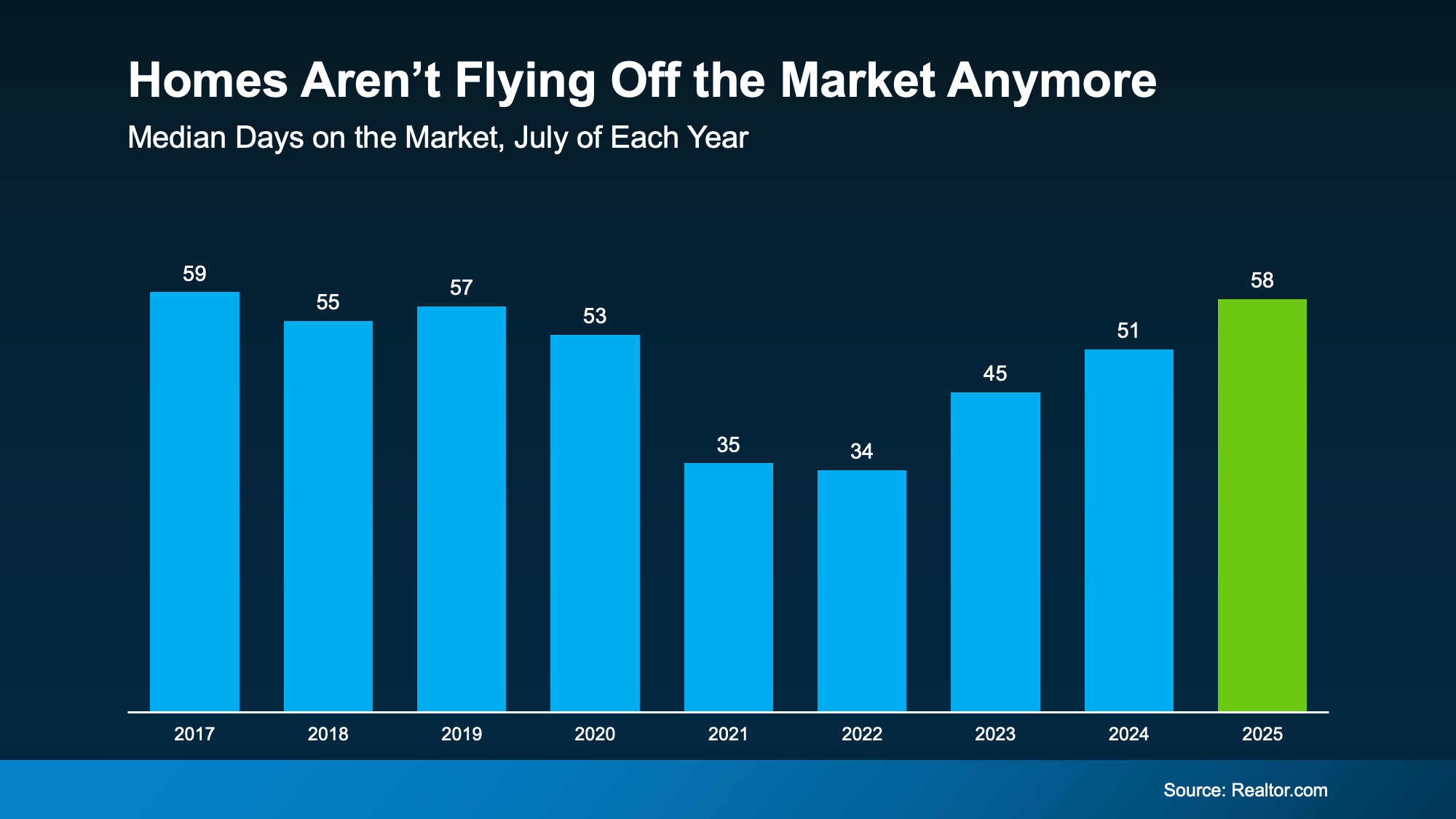
Homes are now spending an average of 58 days on the market, a much more normal timeframe. That’s a huge improvement compared to the height of the pandemic, when houses were flying off the shelves in just a few days (see graph below).


That means you now have more time to make decisions than at any point in the past five years—and that’s a big deal. Now you can:

  • Take your time to think.

  • Negotiate with confidence.

  • Make smart moves without the pressure.

More Time = Less Stress (and More Leverage)

According to the data in the graph above, buyers now have an extra week to decide compared to last year—and nearly double the time compared to the market’s peak.

Back then, the fear of missing out pushed buyers to act quickly, sometimes too quickly. Today, the market moves at a slower pace, giving you the advantage. As Bankrate puts it:

“For years, buyers have been racing to snag homes because of the fierce competition. But the market’s cooled off a bit now, and that gives buyers some breathing room. Homes are staying listed longer, so buyers can slow down, weigh their options and make more confident decisions.”

With more homes available and fewer buyers rushing to snap them up, the market balance has shifted. Bidding wars are less frequent, giving you room to negotiate—and the chance to take a breath before making your decision.

More listings + a slower pace = less stress and more opportunity.

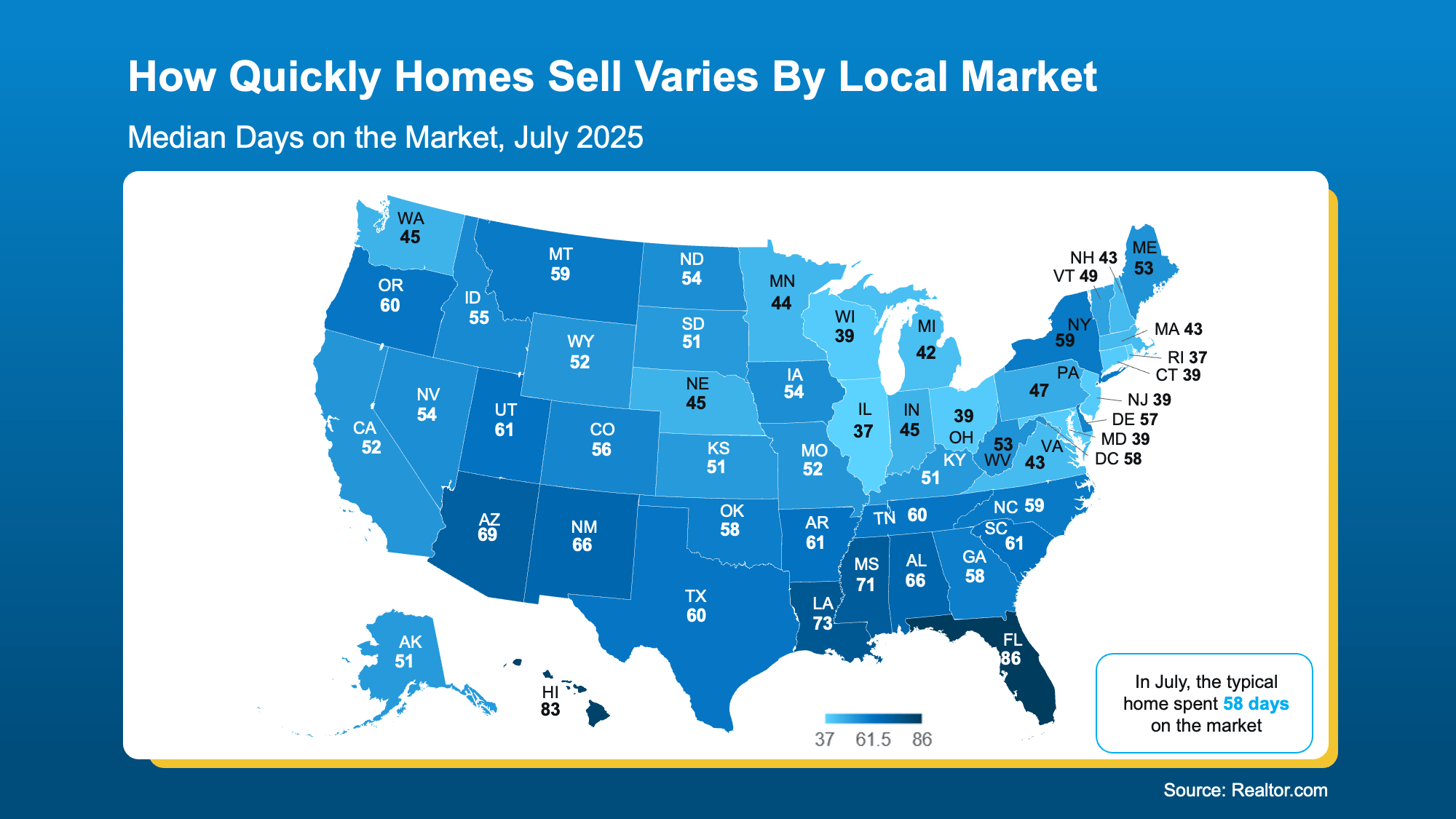
That said, your experience still depends on where you’re buying. While homes are moving slower nationally, local markets set the real pace. Some states are faster than others, and even within a state, activity can vary by zip code or neighborhood.

That’s why working with an agent who knows your area is more important than ever.


To see how your state compares to the national average of 58 days on the market, check out the map below:


As Realtor.com explains:

“While national headlines might suggest a buyer’s market is taking hold, the reality on the ground depends heavily on where and what you’re trying to buy. Local trends can diverge sharply from national averages, especially when you factor in price range, property type, and post-pandemic market dynamics.”

A knowledgeable local agent can guide you on when to act quickly and when you have room to pause, ensuring you never miss the right home.

Bottom Line:
If the hectic pace of the past few years made you hit pause, consider this your green light. The market has slowed, giving you more time, more options, and more control.

With the right agent by your side, you’re in the best position in years to make a smart move.


Let’s chat about what the market looks like in our area and see if now is the right time for you to jump back in.

July 23, 2025

The 5-Year Timeline: Tracking Real Estate Appreciation

A Broader Perspective on Home Prices
If recent headlines about home prices have you feeling uncertain, you’re not alone. But it’s important to step back and look at the bigger picture.

Historically, home values tend to rise over time. While short-term market dips can happen, they’re often outweighed by long-term growth—especially if you plan to stay in your home for five years or more. That kind of timeframe gives you a cushion to weather any temporary shifts.

If you're curious about how prices are trending in our local market, let's talk. Together, we can look beyond the noise and focus on what really matters for your long-term goals.

July 20, 2025

Now’s the Time: Benefits of Buying a Newly Built Home

Hoping to score a better price on your next home—or snag a more affordable mortgage rate? You might be surprised where your best shot lies: in a brand-new build. While many buyers are skipping over new construction, they could be missing out on one of the smartest plays in today’s market.

Inventory is up, and builders are ready to deal. In fact, the latest numbers from the Census and the National Association of Realtors (NAR) show that about 1 in every 5 homes on the market right now is newly built. That’s a huge slice of available homes you don’t want to ignore.

And here’s the kicker—builders are motivated. With more homes on hand, they’re offering serious perks and pricing incentives to attract buyers. If you’ve been waiting for the right moment, this could be it.


Now’s the Time: Builders Are Making Competitive Offer

Based on data from Buddy Hughes, Chairman of the National Association of Home Builders (NAHB),

“Almost 40% of home builders reduced sales prices in the last month . . .”
View More