If you’ve seen headlines or social posts warning of a housing market crash, it’s natural to wonder whether home values are about to take a dive. But here’s the truth:
📊 The data doesn’t signal a crash — it shows steady, continued growth.
Of course, trends will differ by location. Some markets may experience stronger price gains, while others could see brief, modest dips. Still, the overall outlook remains positive — home prices are expected to rise nationally over the next five years.
The Real Story: What the Experts Are Saying
According to the Home Price Expectations Survey (HPES) by Fannie Mae, over 100 top housing market experts share their projections each quarter. The most recent report shows a clear consensus: home prices are projected to climb nationally through at least 2029.
(See the chart below 👇)
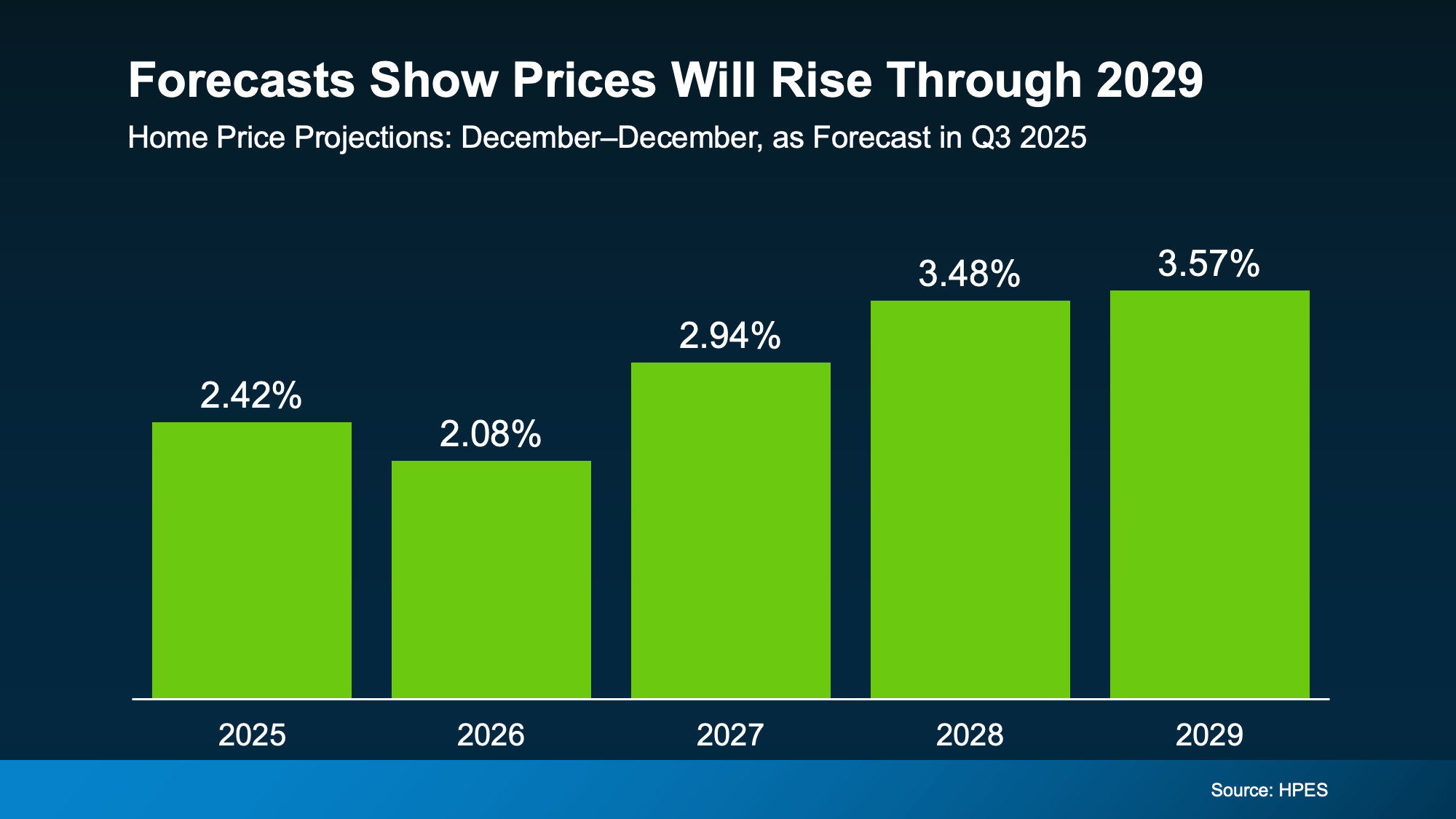
Here’s how to interpret the chart: each bar represents an increase in home prices, not a decline. The only difference year to year is the expected pace of appreciation, which naturally fluctuates.
To paint an even clearer picture, let’s take a look at another breakdown of where prices stand now and where they’re projected to go. In this version, expert forecasts are divided into three groups — the overall average, the most optimistic outlooks, and the most cautious ones (see chart below 👇).
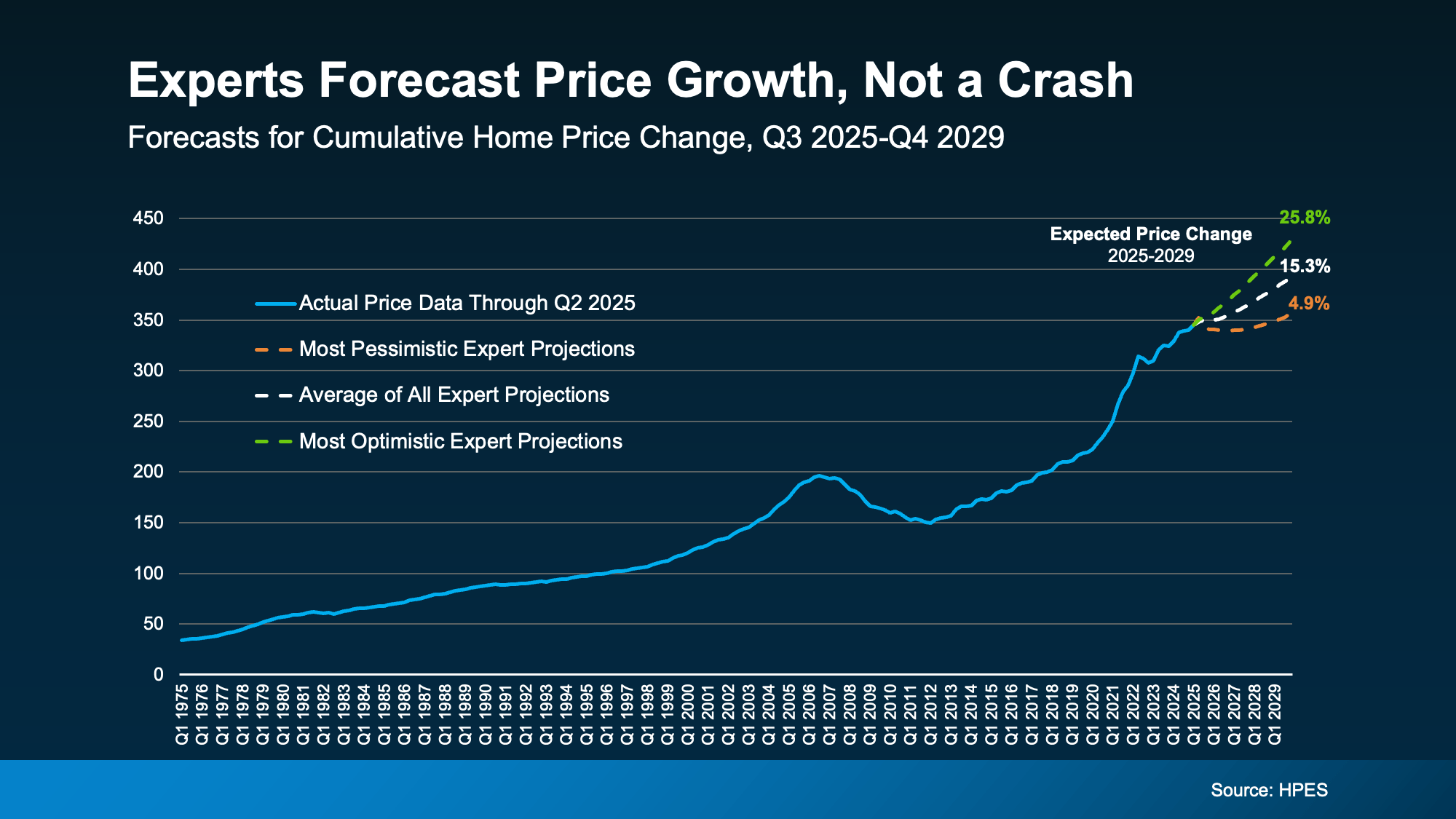
Notice something important in the data: even the most cautious experts expect prices to keep climbing—by nearly 5% over the next few years.
Overall, home prices are projected to rise about 15% between now and the end of 2029.
-
The optimists predict an increase of roughly 26%.
-
The pessimists still anticipate growth of around 5%.
💡 What stands out most? None of these experts—who study housing trends for a living—are forecasting a crash or even a decline over the next five years.
How This Compares to “Normal” Market Conditions
Take another look at the first graph. The projections show annual price increases between 2% and 3.5% over the next five years.
For perspective, the average appreciation rate over the past 25 years has hovered around 4–5% per year.
So, while these new numbers are slightly below that long-term average, they’re actually a sign of stability—a return to a healthier, more sustainable market.
Remember 2020 through 2022? Prices soared 15–20% in some areas because of record-low supply and sky-high demand. Compared to that, today’s pace may feel slower—but it’s really the market finding balance again.
Why Home Prices Aren’t Expected To Crash
A lot of today’s “crash talk” comes from people remembering how quickly prices rose and assuming what goes up must come down. But in real estate, that’s not how it works.
Historically, home prices tend to rise over time.
The key reason we’re not heading toward another 2008 scenario comes down to supply and demand.
Even with affordability challenges, there are still far more buyers than available homes—and that shortage continues to keep upward pressure on prices.
That’s why experts across the board agree:
➡️ We’re not heading for a collapse. We’re on track for steady, long-term growth.
And if you’re concerned about the broader economy, remember this: over the past 50 years, the housing market has weathered countless economic shifts—and it always recovers. We’re already seeing signs of that recovery taking shape now.
Bottom Line
If you’ve been holding off on buying or selling because you’re worried about a crash, it’s time to look past the headlines and focus on the facts.
The real question isn’t if home prices will rise — it’s how much.
📞 Let’s connect so we can discuss what’s happening in our local market and what these expert forecasts mean for your next move.