You’ve been hoping for mortgage rates to drop — and the good news is, they’ve started to! But will this downward trend continue? And just how low could rates go?
According to housing experts, there’s still room for further decline over the next year. One key factor to watch is the 10-year Treasury yield — a leading indicator that offers valuable clues about where mortgage rates are headed.
The Connection Between Mortgage Rates and the 10-Year Treasury Yield
For more than 50 years, the average 30-year fixed mortgage rate has moved closely in line with the 10-year Treasury yield — a trusted benchmark for long-term interest rates. (See graph below.)
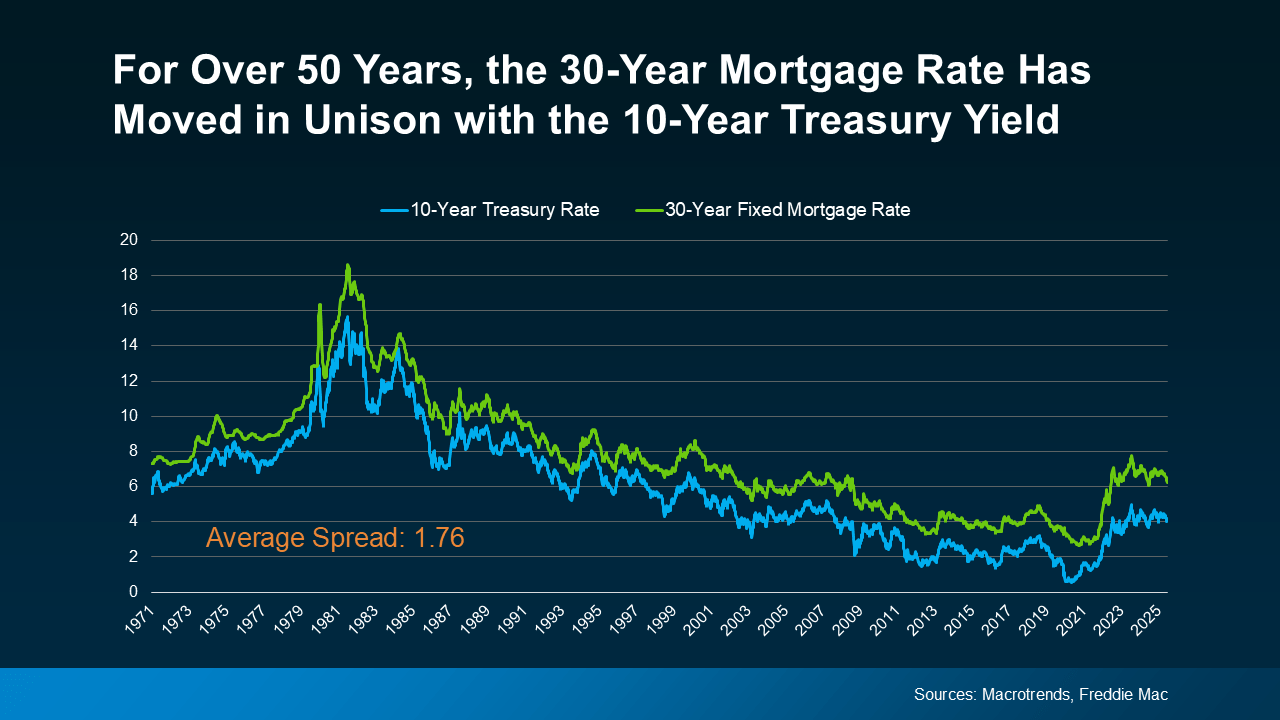
When the 10-year Treasury yield rises, mortgage rates almost always follow. And when it drops? Mortgage rates typically ease too.
It’s a relationship that’s held steady for more than half a century — so steady that experts can even predict what the “normal” gap between the two should be. That gap is called the spread, and it usually sits around 1.76 percentage points(or 176 basis points, if you’ve heard the term).
The Spread Is Shrinking — and That’s Good News
In recent years, that spread has been much wider than usual. Why does that matter? Think of the spread as a barometer of market confidence. When uncertainty clouds the economy, fear widens the gap — and mortgage rates climb higher than expected.
But here’s the encouraging part: that extra-wide spread is finally narrowing. As economic conditions stabilize and confidence grows, the gap is starting to close — a promising signal that mortgage rates could continue easing in the months ahead (see graph below).
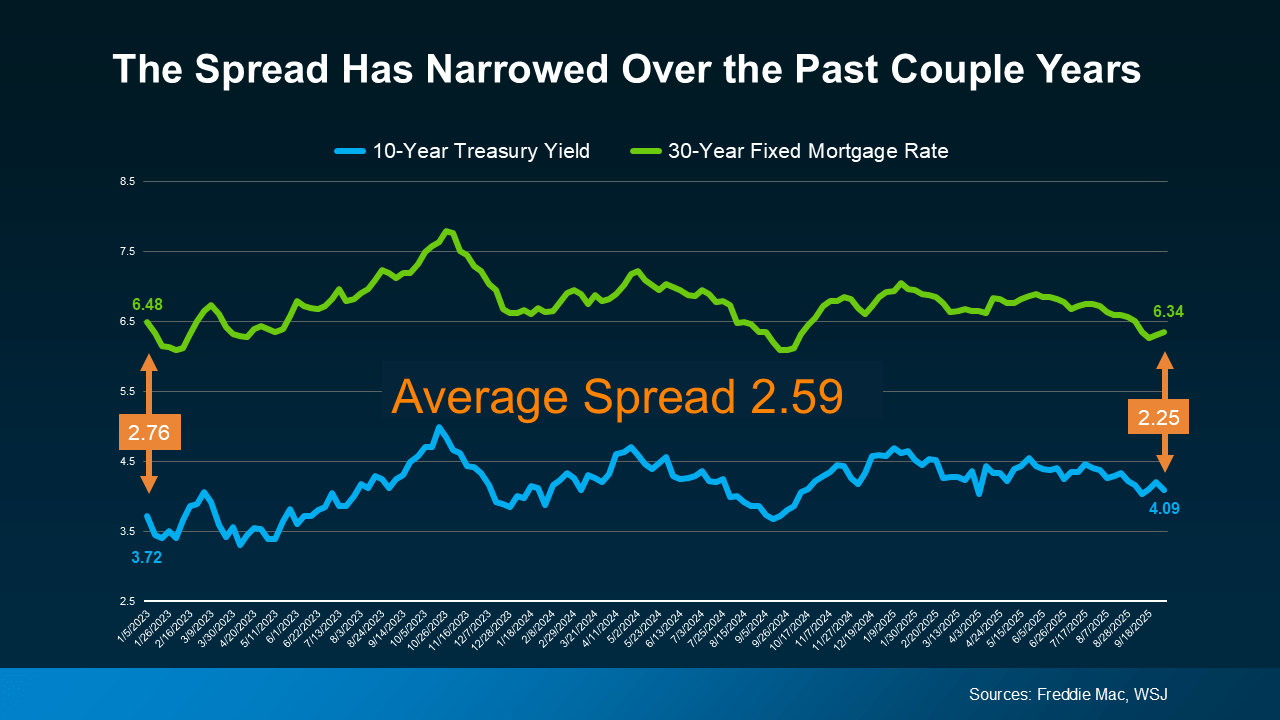
And that’s great news — it means there’s room for mortgage rates to fall even more. According to a recent report from Redfin:
“A lower mortgage spread equals lower mortgage rates. If the spread continues to decline, mortgage rates could fall more than they already have.”
The 10-Year Treasury Yield Is Expected To Decline
It’s not just the spread that’s shifting — the 10-year Treasury yield itself is also projected to trend lower in the coming months. And when you combine a declining yield with a narrowing spread, you get two powerful forces working together to push mortgage rates even lower as we head into next year.
This long-standing relationship helps explain why many housing experts believe mortgage rates will continue to ease — with some even suggesting they could dip into the upper 5% range by late next year.
Here’s the math behind it: if the 10-year Treasury yield currently sits around 4.09%, and you add the typical spread of 1.76%, you land near a 5.85% mortgage rate — a level that would feel like real relief for today’s buyers (see graph below).
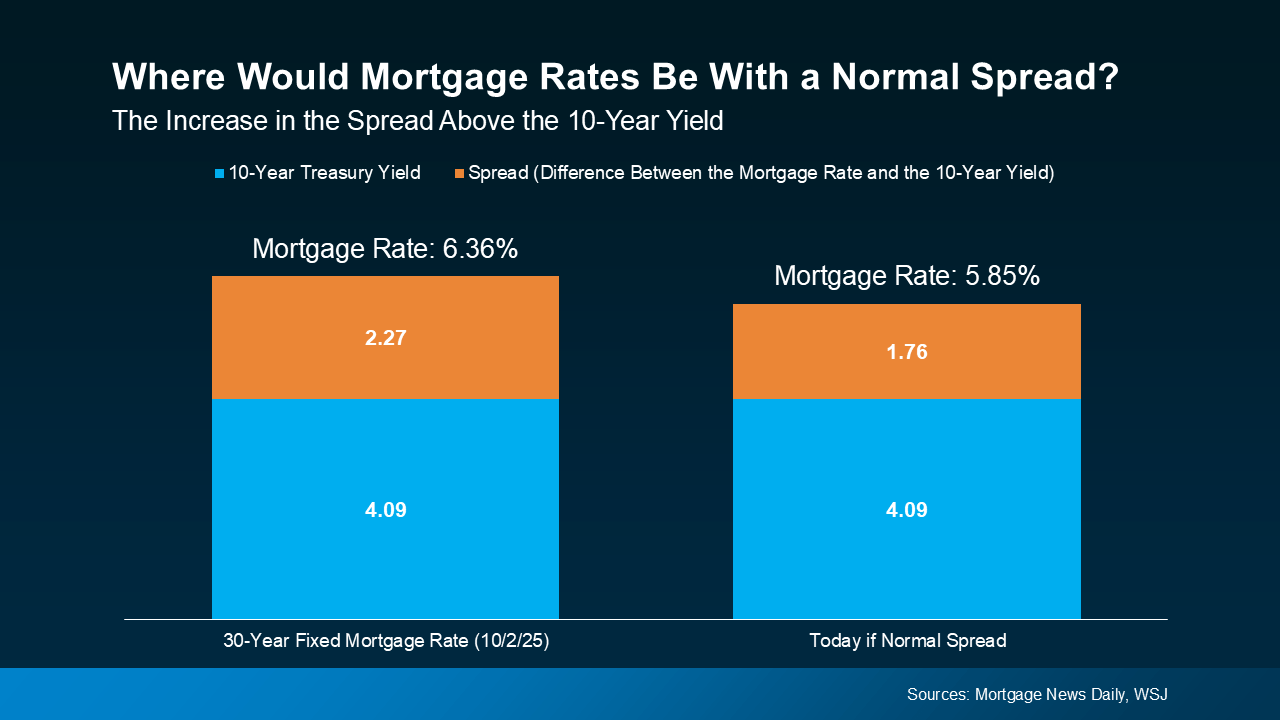
Of course, all of this can shift as the economy evolves. There will always be ups and downs along the way — influenced by factors like the job market, inflation, and overall economic growth.
Still, experts anticipate a gradual decline in mortgage rates through 2026, and the encouraging news is that we’re already seeing signs of progress in that direction.
Bottom Line
Tracking these market changes can feel overwhelming, but you don’t have to do it alone. Having a knowledgeable real estate professional or lender by your side makes all the difference — they’ll monitor the trends and help you make smart, confident moves.
If you’d like real-time updates on mortgage rates and insights tailored to your goals, let’s connect. Together, we’ll make sure you stay informed and ready for whatever comes next.