Perhaps you've noticed the buzz about a record number of homes on the market—and wondered if that signals an impending housing crash.
In truth, the numbers tell a different story. In many areas, increased inventory isn't a warning; it's a welcome indicator that the market is moving toward stability and long-term health.
🔍 What’s Really Happening With Housing Inventory?
According to the latest data from Realtor.com, the number of homes on the market has reached its highest point since 2020 (see the white line in the graph below).
However, it’s important to keep this in perspective: inventory levels are still well below where they were before the pandemic (as shown in gray). So while we’re seeing growth, we’re not yet back to typical, pre-2020 market conditions.
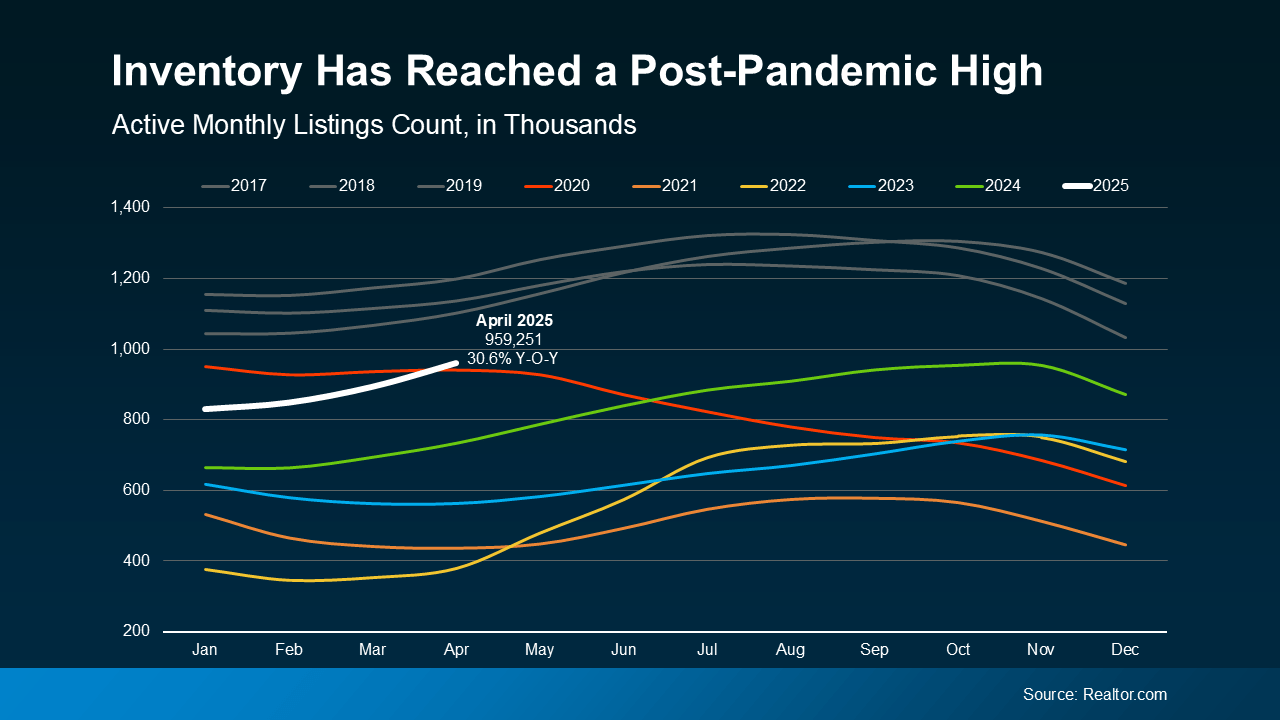
That means there are more homes available now than we’ve seen in recent years.
While it’s true that inventory has increased compared to the ultra-competitive pandemic market, we’re still well belowwhat’s considered normal. And that context matters.
🏘️ Why Rising Inventory Isn’t a Red Flag
When people hear “inventory is up,” many instantly think of 2008—when a flood of listings led to a market crash. But today’s market is nothing like that.
The difference? Back then, we had too many homes and not enough buyers. Now, we’re experiencing the opposite—a severe housing shortage that’s been building for over a decade.
Take a look at the red bars in the graph below. They represent the years since 2012 when new home construction couldn’t keep up with the number of households being formed. The deeper the bar, the bigger the gap between demand and supply—and the more we’ve fallen behind.
In short, today’s growing inventory isn’t a sign of oversupply—it’s a step toward recovering from years of underbuilding.
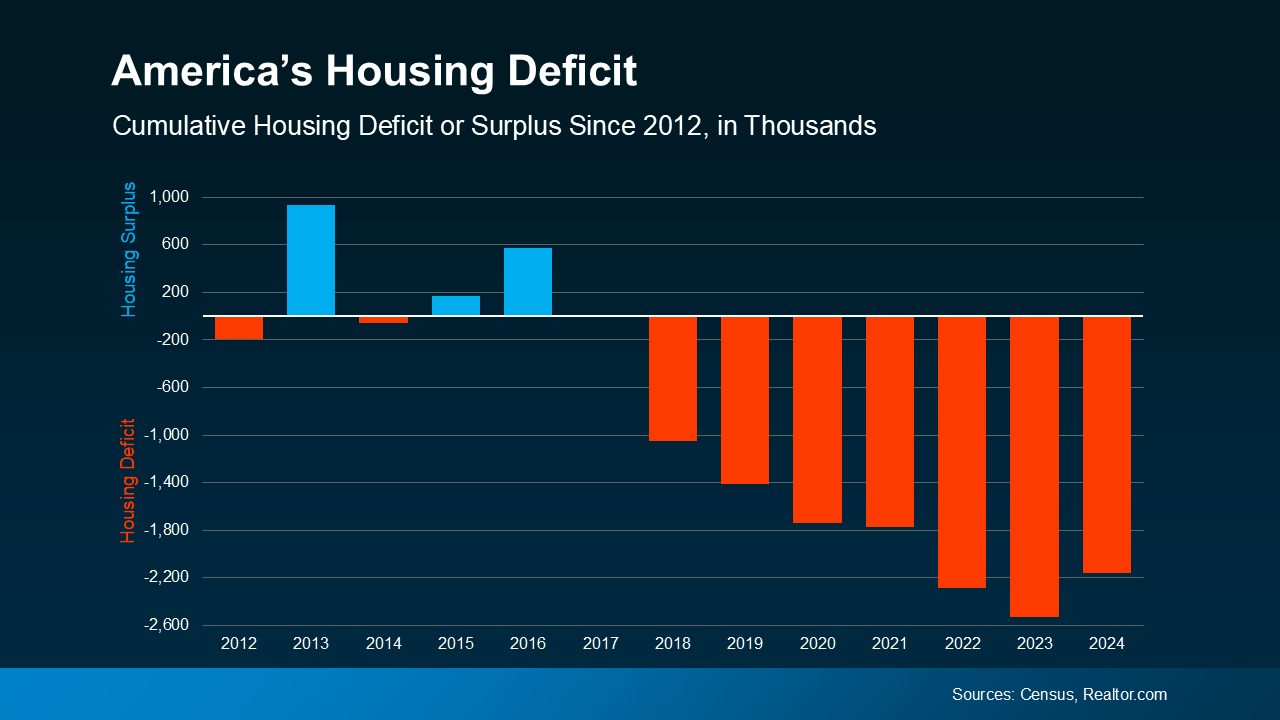
One major reason this housing shortage has persisted is simple: new home construction hasn’t kept pace with the growing number of people who need places to live.
In fact, the U.S. is currently facing a shortfall of millions of homes, and closing that gap won’t happen overnight. According to Realtor.com:
“At a 2024 rate of construction relative to household formations and pent-up demand, it would take 7.5 yearsto close the housing gap.”
That’s a clear sign that we’re not in danger of having too many homes on the market—far from it. In most areas, there still aren’t enough homes to meet demand.
So even though inventory is ticking up, it’s not a warning sign. It’s a necessary—and long-overdue—step toward correcting a national shortage that’s been building for over a decade.
The Big Picture
Don’t be misled by alarming headlines—rising inventory doesn’t mean a market crash is coming. It simply signals that the housing market is slowly moving back toward balance and long-term stability. And that’s good news for buyers and sellers alike.