You don’t have to put your home-buying plans on hold just because winter has arrived. While spring is often considered the “best” season to buy, recent data suggests that January may actually offer an advantage—especially for buyers who are mindful of their budget.
It may sound unexpected, but there’s a good reason January deserves attention.
1. Home Prices Are Often More Buyer-Friendly
According to LendingTree, January is typically the most affordable month to purchase a home. Historically, homes sold during this time tend to have lower price-per-square-foot averages compared to other months. As the market moves into spring, buyer demand increases, which often drives prices higher. This pattern has shown up consistently over many years of housing market data.
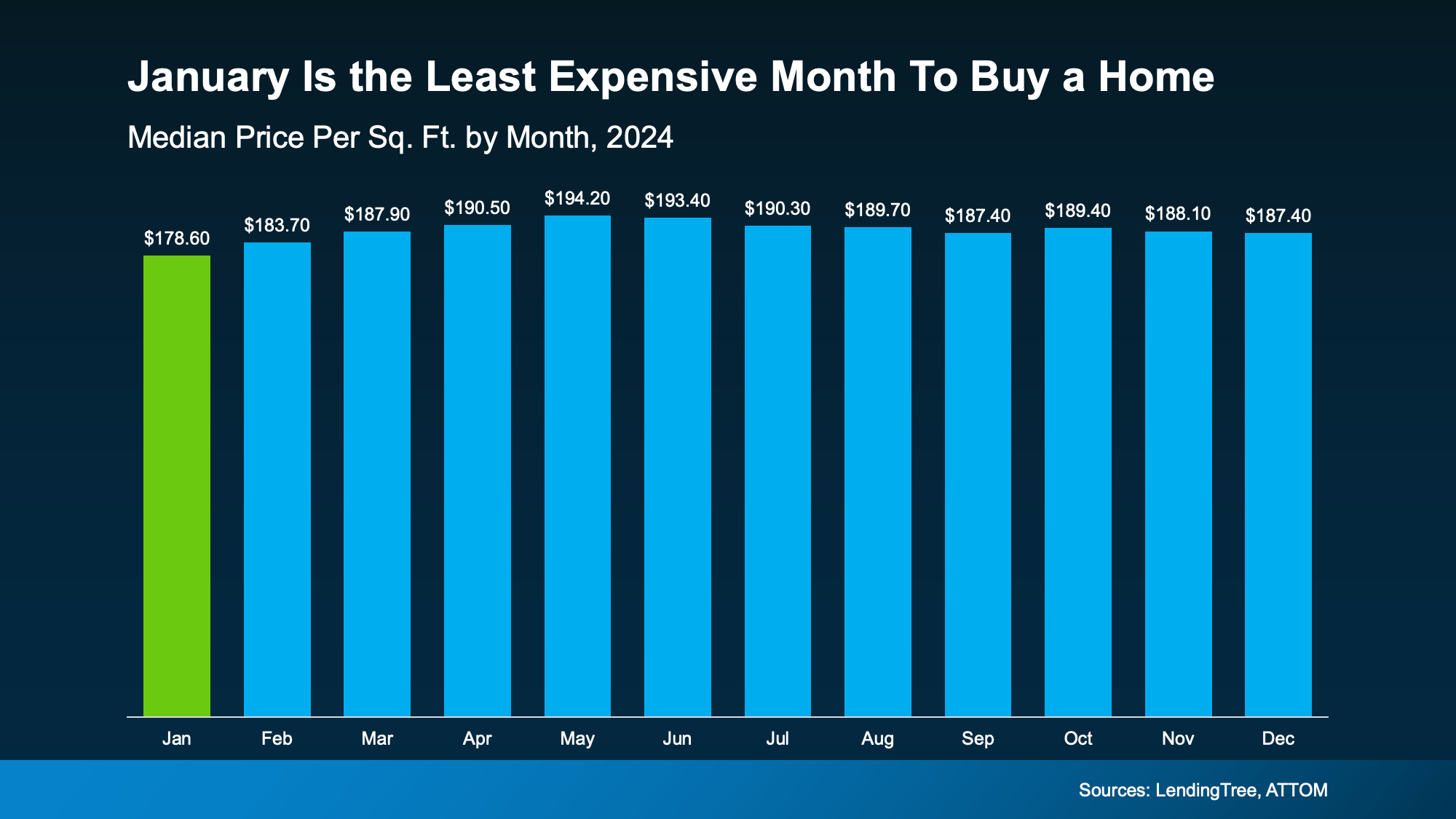
So what does that difference actually look like in real dollars? The numbers tell a compelling story. Based on the most recent full year of data, buyers who purchased a typical 1,500-square-foot home in January spent roughly $23,000 less than those who closed in May. This pricing gap isn’t a one-time anomaly—it’s a seasonal pattern that tends to repeat itself year after year, as illustrated in the chart below.

Of course, the exact savings will vary based on the home’s price, size, and type. Nevertheless, the overall pattern remains consistent. For today’s buyers, these seasonal price differences can translate into meaningful savings—especially at a time when affordability remains a challenge for many households.
2. Less Competition and More Willing Sellers
So why does winter often work in a buyer’s favor? Simply put, it’s one of the quietest periods in the real estate market. Many buyers and sellers step back, choosing to wait for the traditional spring rush. That slowdown creates several advantages:
-
Fewer buyers competing for the same homes
-
A lower chance of multiple-offer situations
-
Sellers who are more open to negotiation
-
More time to view homes and make thoughtful decisions
Winter doesn’t just reduce buyer activity—it also highlights sellers who are serious about moving. With fewer shoppers in the market, motivated sellers are often more flexible and realistic. As noted by Realtor.com, reduced competition can give buyers greater leverage, leading to opportunities such as closing cost assistance, repair credits, home warranties, or other concessions that can add up to thousands in savings.
That doesn’t mean every home will come with discounts, but it does mean buyers are more likely to be heard, respected, and given room to negotiate.
Do you think you should hold off until Spring?
Here’s the key takeaway: when you remove the urgency and competition that typically come with spring, it becomes easier to secure the right home at a price that aligns with your budget.
Waiting until spring usually brings more buyers back into the market, which can drive up prices and increase stress. While the best timing always depends on your personal situation, it’s worth reconsidering the idea that warmer weather automatically means better opportunities.
Buying in January often comes with three major benefits: less competition, the potential for lower prices, and more motivated sellers. Those advantages tend to fade once the spring market heats up.
Bottom Line
If you’ve been considering making a move, winter may offer more opportunity than you expect.
Wondering what buying in January could look like for you? Let’s review your numbers and explore the homes currently available in our local market.